Infrared Camera Surveys
Thermal imaging helps identify temperature anomalies linked to leaks and moisture movement.
Thermal Imaging Leak Detection
Thermal imaging uses infrared camera technology to identify temperature variations that may indicate hidden leaks, moisture ingress and heating system faults without unnecessary disruption.
Thermal surveys are frequently used during underfloor heating investigations, central heating leak detection and hidden water leak inspections.
Google Reviews ★★★★★ 5.0 Rating 70+ Reviews Read ReviewsThermal imaging helps identify temperature anomalies linked to leaks and moisture movement.
Surveys can be carried out before unnecessary access work, lifting floors or opening walls.
Useful for underfloor heating, central heating and concealed pipework investigations.
Thermal images can support written findings and photographic investigation records.
What It Means
Thermal imaging leak detection uses infrared technology to read temperature differences across visible surfaces. Those heat signatures can help identify abnormal patterns linked to hidden moisture, pipe routes, heating system faults or suspected leak locations.
The method is non-destructive, so it can be used before floors, walls or ceilings are opened. It is especially useful where hot water pipework, underfloor heating circuits or damp areas may be influencing surface temperatures.
Thermal imaging water leak detection is most effective when the findings are interpreted alongside symptoms, moisture readings, pressure testing, tracer gas or acoustic detection where required.
Applications
Thermal patterns can help identify abnormal heat loss, cold zones and suspected UFH pipework issues.
Infrared checks can support diagnosis where heating pipework, radiators or circuits are behaving abnormally.
Temperature differences can sometimes indicate concealed water movement behind finishes or below floors.
Thermal images can help identify affected areas before moisture mapping or further testing is completed.
Bathroom floors, walls and fittings can be checked for temperature changes linked to water escape.
Thermal imaging can support non-destructive leak tracing before access work is recommended.
Advantages
Limitations
Thermal imaging is a powerful investigation tool but not every leak produces a visible thermal signature. A leak may be too deep, too cold, too slow or too affected by surrounding materials to show clearly.
Pipe depth, floor construction, insulation, heating state, recent water use and environmental conditions can all influence what appears on an infrared camera.
For this reason, thermal survey leak detection is often combined with moisture mapping, tracer gas, acoustic detection or pressure testing to produce more reliable findings.
Examples
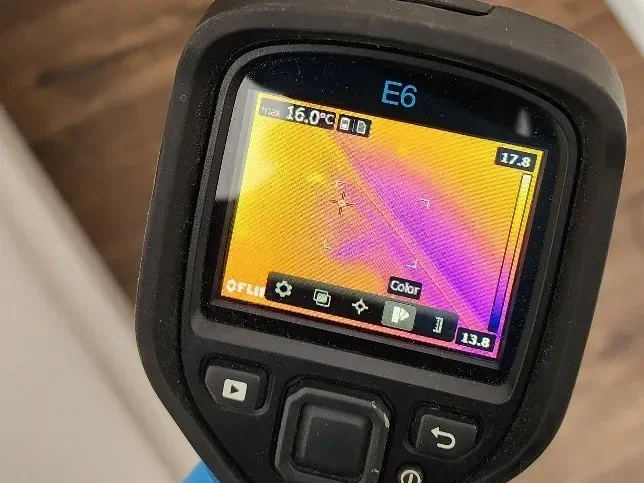
Infrared camera view used to identify temperature differences during a leak investigation.
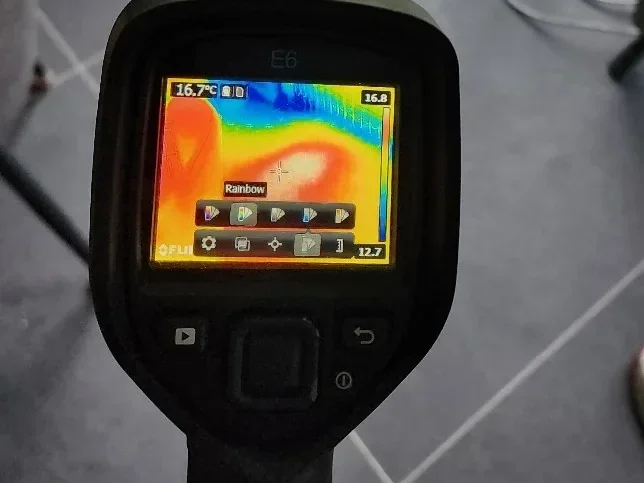
Thermal imaging can help assess underfloor heating layouts and abnormal heat patterns.
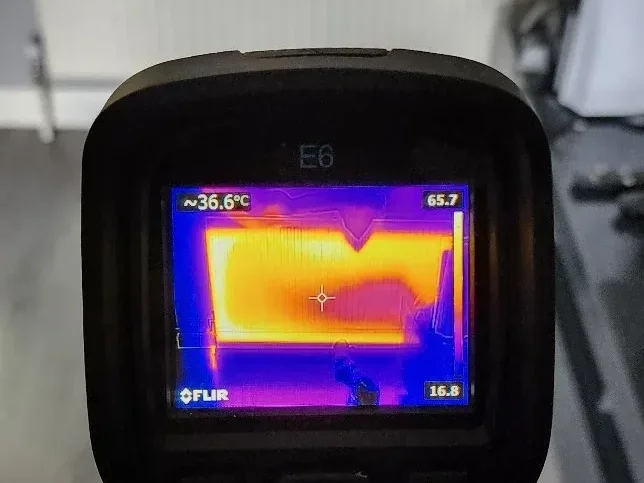
Infrared checks support heating system leak investigation and boiler pressure loss diagnosis.
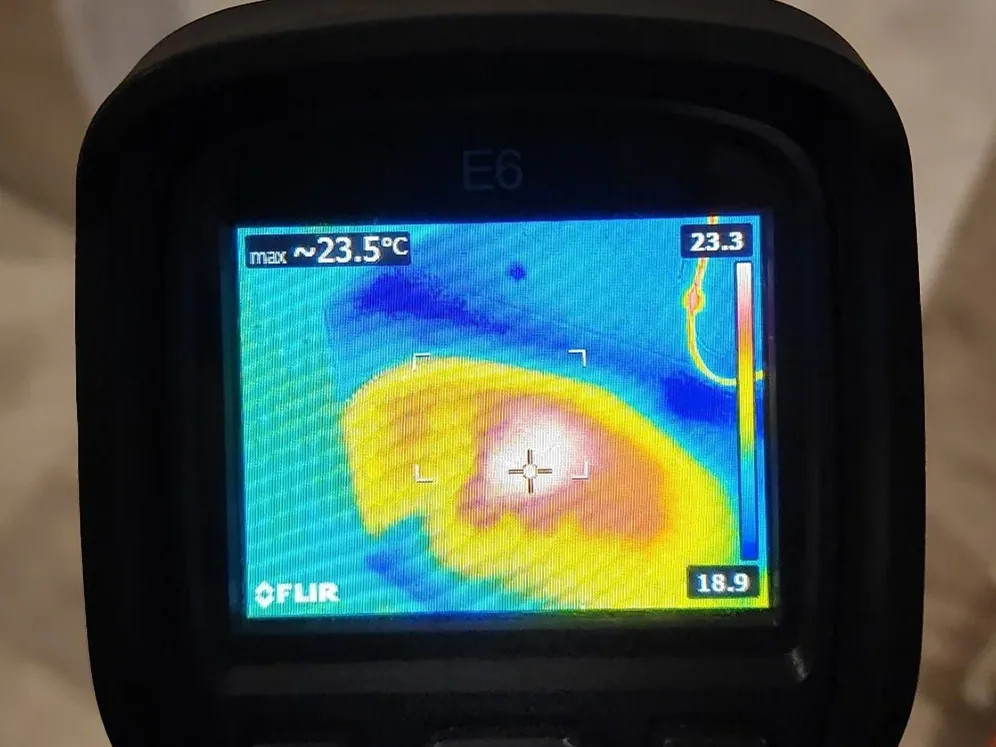
Thermal imaging can support bathroom damp and water ingress investigations.
Related Investigations
Published investigations where thermal imaging was used as part of the leak detection process.
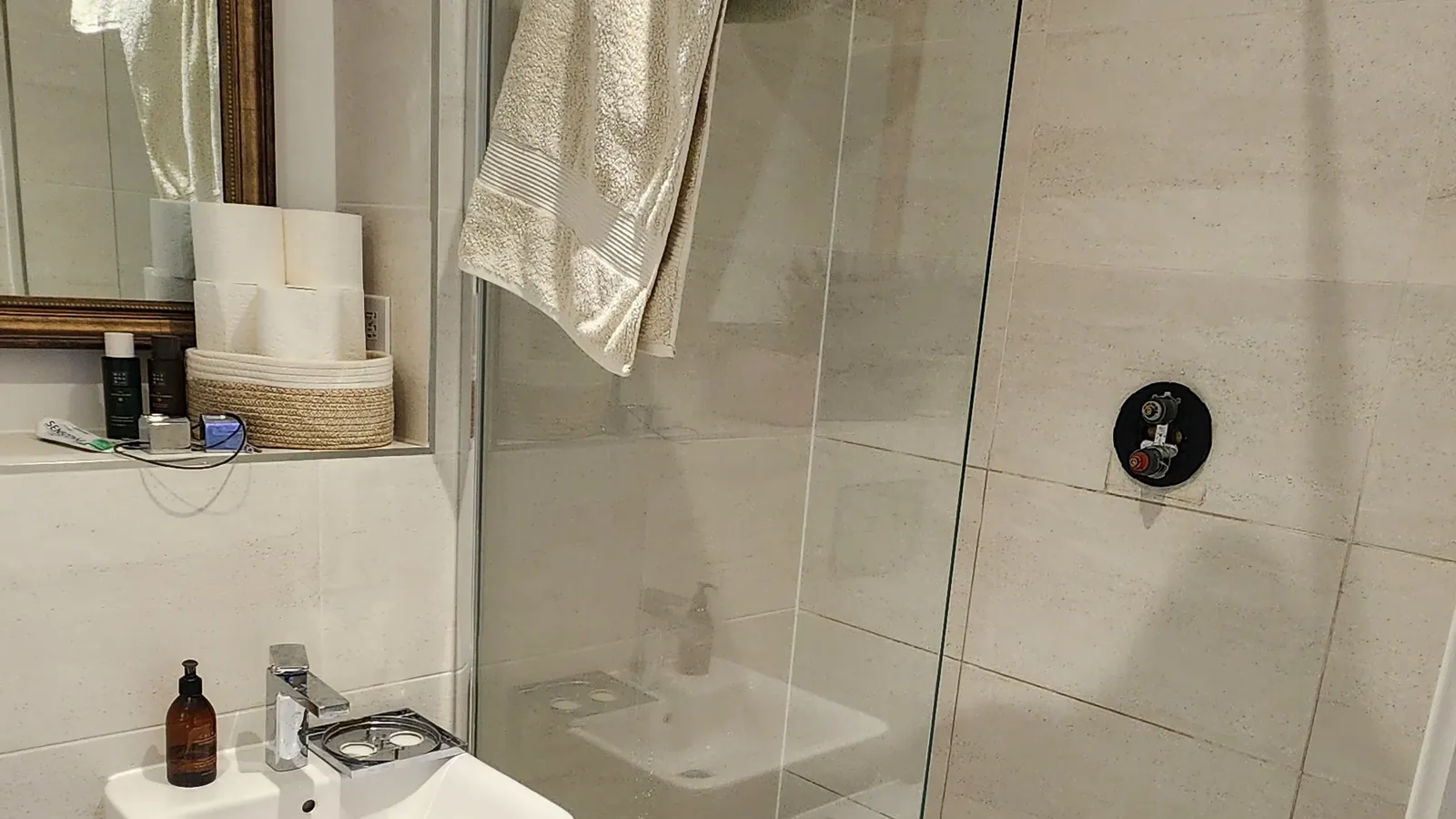
Bathroom Leak
Water reaching the flat below was traced to an ensuite shower room after the bathroom initially suspected by the client was ruled out.
View investigation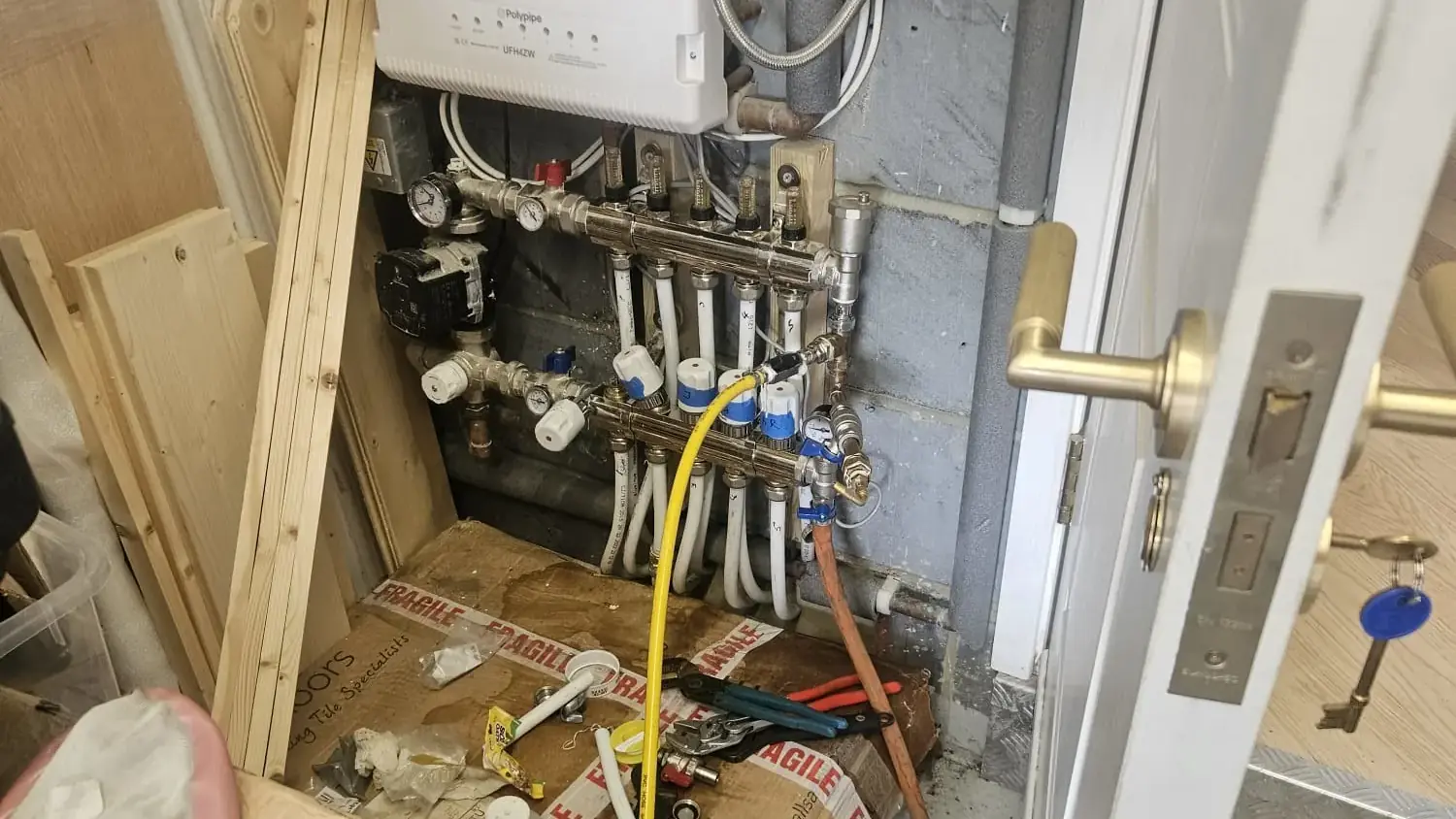
Underfloor Heating Leak
A plumber identified pressure loss on an underfloor heating circuit in Thames Ditton; combined testing narrowed the issue to an area beneath the wood flooring.
View investigation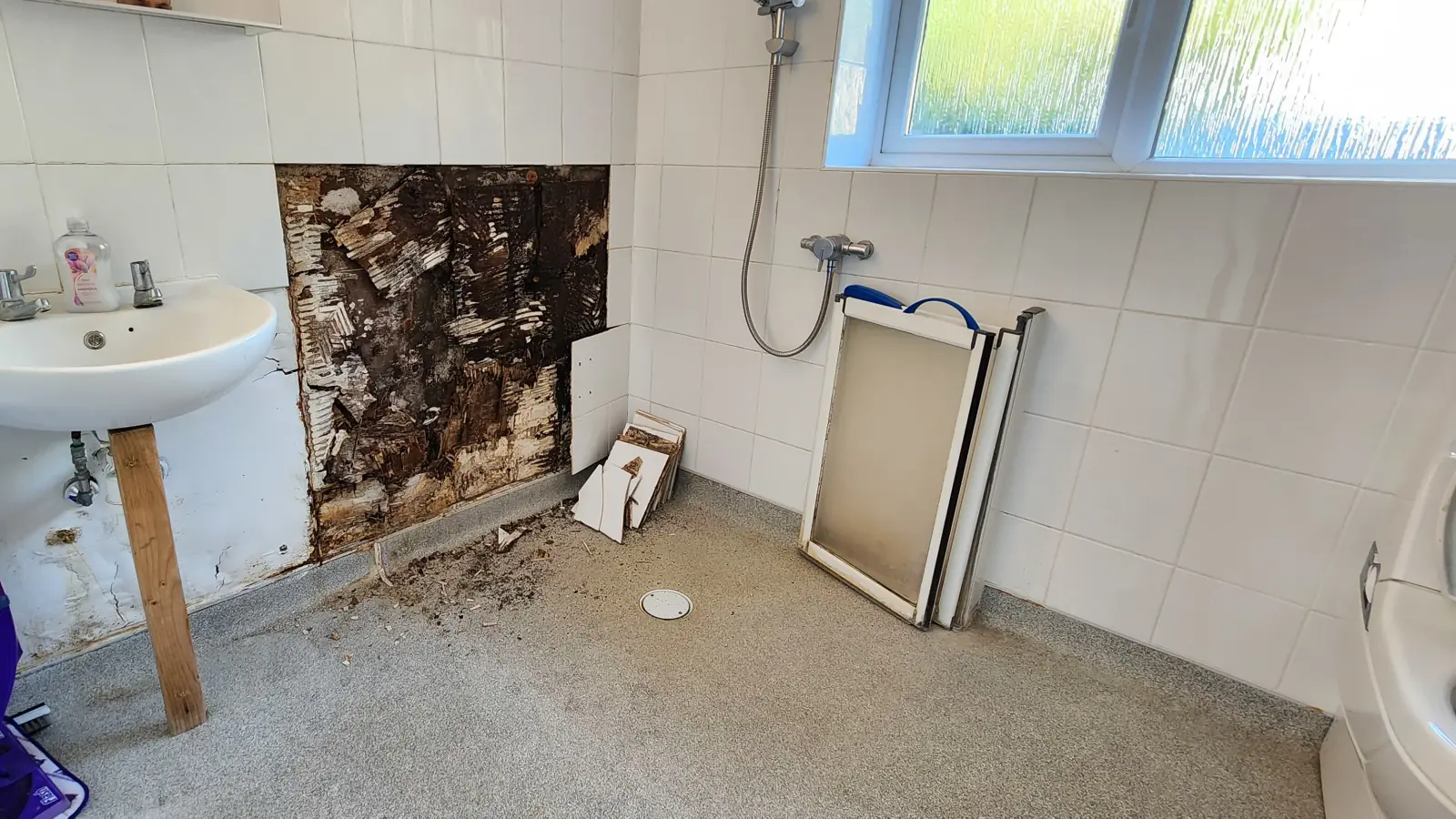
Damp Or Moisture Ingress
Loose bathroom tiles and a smell of damp were traced to water penetrating the grout joints and being absorbed into the timber substrate behind the tiles.
View investigationRelated Services
Specialist investigation for hidden water leaks in pipework, floors, walls and ceilings.
Thermal and tracer gas investigation for UFH pipework, pressure loss and damp floors.
Heating system leak detection for boiler pressure loss and concealed pipework faults.
Leak tracing and access evidence for concealed leaks and insurance claim requirements.
Damp surveys and moisture mapping for water ingress and hidden leak symptoms.
Investigation for hidden waste pipe, soil pipe and foul water leak symptoms.
FAQs
Thermal imaging detects temperature differences on visible surfaces. These patterns can indicate hidden moisture, heating pipe routes, abnormal heat loss or areas requiring further leak investigation.
No. Thermal imaging is powerful, but not every leak produces a visible thermal signature. Pipe depth, floor construction, insulation and environmental conditions can affect results.
No. Thermal imaging is non-invasive and does not require opening walls or floors. It is often used before access work is considered.
Thermal imaging can help assess underfloor heating circuits and identify abnormal heat patterns, but it may need to be combined with tracer gas, acoustic detection or moisture mapping.
Yes. Thermal images can support written findings and photographic evidence where insurers, loss assessors or property owners need documented investigation records.
Get Expert Help
Speak to a specialist about infrared leak detection, underfloor heating symptoms, damp areas or suspected concealed pipework leaks.
Phone: 0333 577 0194 WhatsApp: Message us Email: Use the contact form