
Commercial Property Context
Investigation planned around the building, access limits, occupants and operating requirements.
Commercial Leak Detection
Locate hidden leaks within offices, warehouses, schools, retail units and commercial buildings using specialist non-destructive leak detection methods.
We support facilities managers, managing agents, landlords and commercial property owners with structured leak investigations planned around access, operating constraints and clear reporting needs.
Google Reviews ★★★★★ 5.0 Rating 70+ Reviews Read ReviewsInvestigation planned around the building, access limits, occupants and operating requirements.
Thermal imaging, tracer gas and acoustic detection used before disruptive access work.
London, Surrey, Berkshire, Buckinghamshire, Oxfordshire, Hampshire and Sussex.
Evidence-led reporting suitable for facilities managers, contractors and property teams.
What It Means
Commercial leak detection describes the property, operating constraints, stakeholders and reporting needs around an investigation. The affected system may still require a specific water, mains or heating leak investigation.
The process is suitable for business and managed premises such as offices, schools, care settings, apartment blocks, warehouses, retail units and landlord properties, subject to the affected system, safe access and agreed site requirements.
Use mains water leak detection for a private supply pipe or external water loss, central heating leak detection for heating-circuit pressure loss, and plumbing leak detection for concealed internal pipework where commercial operating context is not the main concern. Where access or claim documentation is required, see trace and access or insurance leak investigation.
Symptoms
A sudden rise in water consumption can indicate a hidden commercial water leak or supply pipe issue.
Damp ceiling areas may point to concealed pipework leaks above offices, corridors or occupied areas.
Ceiling staining should be traced before repairs cover the source of the water.
Commercial heating systems losing pressure may require leak detection across plant rooms and pipe routes.
Moisture below floor finishes can affect operations and may need non-destructive investigation first.
Repeated reports from tenants, staff or occupants need structured investigation and clear reporting.
Repeated reports of damp, leaks or pressure loss may indicate a concealed system fault.
Where unexpected usage is the main symptom, a controlled water-meter leak test can provide useful initial information before the site investigation is scoped.
Process
We review site symptoms, building layout, access constraints and operational requirements.
Appropriate leak detection methods are used while working around occupants and business activity.
Findings are correlated to narrow the likely source or affected area within the commercial property.
Written findings can support access planning, facilities action, contractor handover or an insurance discussion.
Findings can give facilities teams, landlords, managing agents and repair contractors a clearer basis for access planning and responsibility. After a likely leak area is identified, the appropriate contractor or responsible party can arrange access and repair, with verification checks recommended where the evidence indicates they may be useful.
Physical access, permanent repair, reinstatement and insurer approval remain separate unless specifically included in the agreed scope.
Why It Matters
Investigations can be carried out while buildings remain operational wherever possible.
Technology
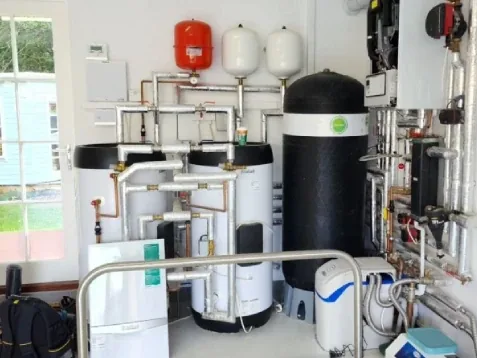 Thermal Imaging May help assess temperature patterns around occupied areas, pipe routes and concealed building services.
 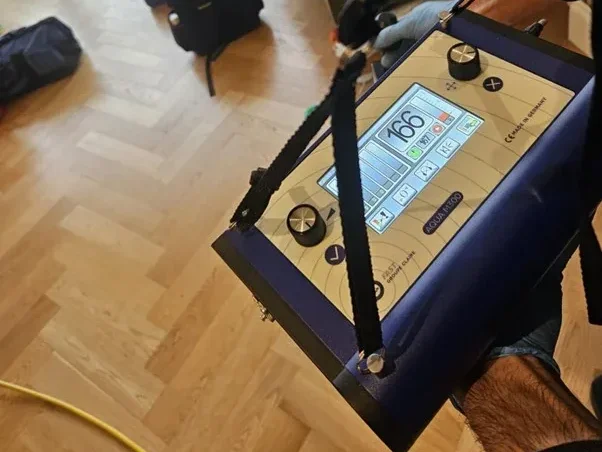 Acoustic Detection May contribute evidence on pressurised pipework where access restrictions and background conditions allow.
 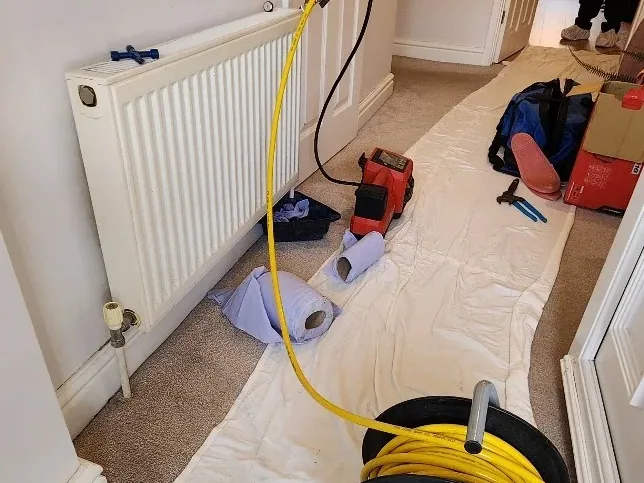 Tracer Gas Setup Can help narrow hidden or external pipe leaks where the relevant system can be isolated and tested safely.
 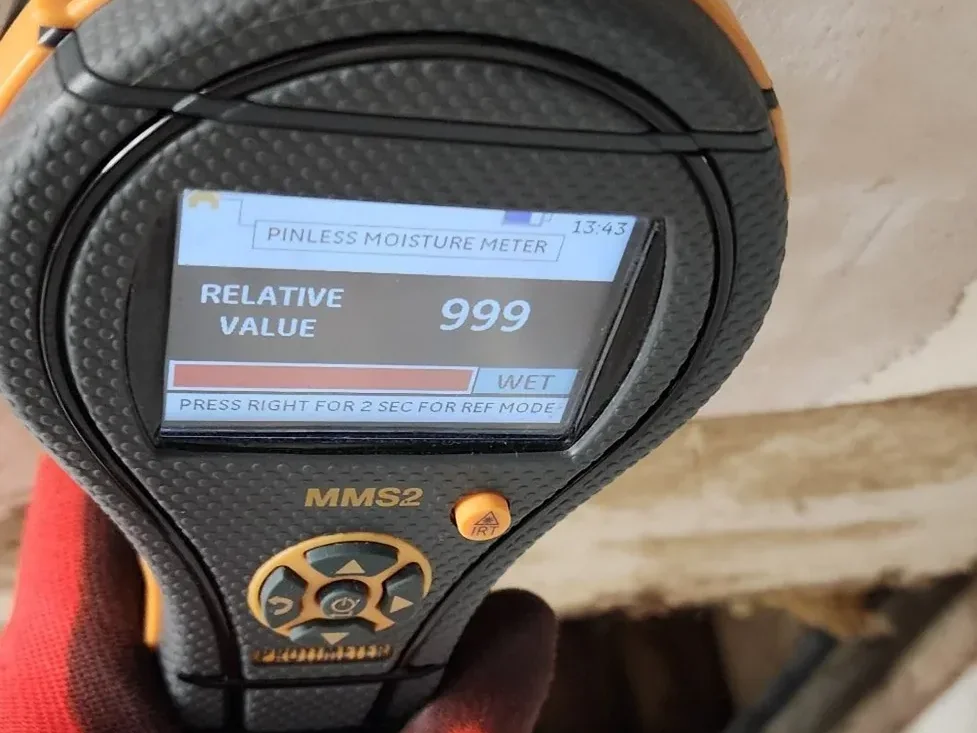 Moisture Mapping Helps record moisture distribution so affected areas can be compared with shared or complex pipe routes.
 Methods are selected around the affected system, access restrictions, occupancy, pipe routes, moisture evidence and safe isolation. Not every method is suitable for every commercial site, and no single technique guarantees an exact result in every circumstance.
Supporting Methods
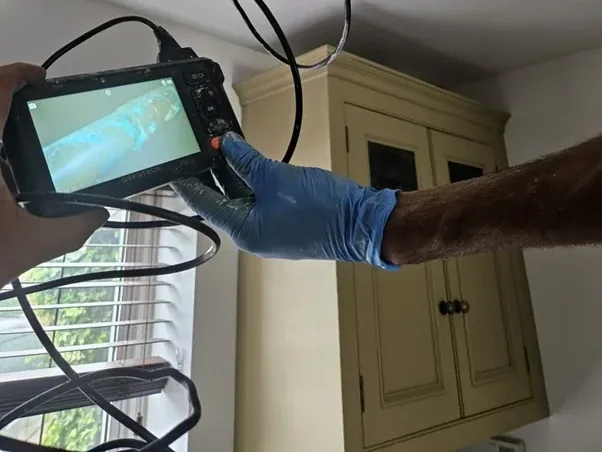
Small inspection cameras are used to visually check concealed voids, pipe routes and difficult-to-access areas before opening up.
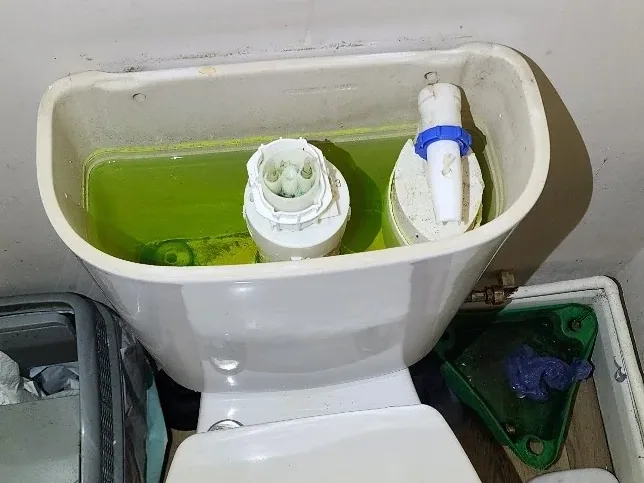
Coloured test dye can help confirm water paths, waste leaks, bathroom leaks and suspected escape routes.
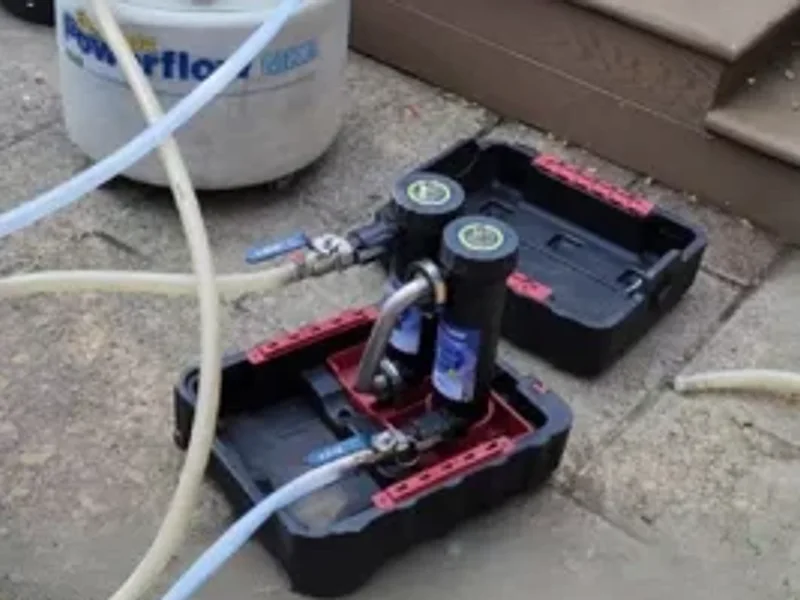
Controlled pressure testing helps identify whether sealed pipework or heating circuits are losing pressure.
Investigation Evidence
This published investigation records a private nursery car-park mains leak and the operational context needed to locate, access and repair it efficiently.
Related Services
For concealed or uncertain internal water leaks where the affected pipework system is not yet known.
Evidence-led investigations and reports for escape of water and insurance claim requirements.
Leak tracing and access evidence for concealed leaks and insurer requirements.
External supply pipe and underground water leak detection for running meters and high bills.
Damp surveys and moisture mapping for water ingress and hidden leak symptoms.
For pressure loss or concealed leakage within commercial or communal heating circuits.
Coverage
Commercial leak detection surveys are available across London, Surrey, Berkshire, Buckinghamshire, Oxfordshire, Hampshire and Sussex for facilities managers, managing agents, landlords and commercial property owners.
FAQs
The commercial investigation process is suitable for business and managed premises including offices, warehouses, schools, retail units, managed residential blocks and landlord properties, subject to site access and the affected system.
Yes. Commercial leak investigations can often be planned around business hours, access requirements and occupied areas to reduce disruption.
Yes. We can provide written findings, photographs and recommendations for facilities managers, managing agents, landlords and maintenance teams.
Written findings and photographs may support an insurance claim, loss assessor request or repair plan where documented evidence is required. The insurer or policy provider decides coverage.
Investigations can be planned around occupants, staff, tenants and customers, using appropriate non-destructive methods to reduce disruption where site conditions allow.
The commercial investigation process can be planned for occupied or sensitive premises, subject to the affected system, safe access and agreed operational constraints.
Scheduling depends on the agreed scope, site access and availability. Provide any operating-hour or access constraints when making the enquiry so they can be considered.
Get Expert Help
Speak to a specialist about a commercial water leak, occupied building issue, high water usage or facilities management investigation.
Include the building type, affected area, operating or access constraints, known meter or system details and the best site contact so the investigation can be scoped appropriately.
Phone: 0333 577 0194 WhatsApp: Message us Email: Use the contact form