
Specialist Heating Surveys
Focused investigation for central heating losing pressure and hidden pipe leaks.
Central Heating Leak Detection
Locate hidden heating system leaks and boiler pressure loss using thermal imaging, tracer gas and non-destructive investigation techniques.
Pressure loss is a symptom rather than proof of a leak. We investigate suspected concealed heating-circuit leakage after visible or component-related causes have been considered.
Google Reviews ★★★★★ 5.0 Rating 70+ Reviews Read ReviewsFocused investigation for central heating losing pressure and hidden pipe leaks.
Thermal imaging, tracer gas and acoustic equipment used where appropriate.
London, Surrey, Berkshire, Buckinghamshire, Oxfordshire, Hampshire and Sussex.
Written findings and photographs can be provided for claim support.
What It Means
A central heating leak is water loss from the pressurised heating circuit. It may be on radiator pipework, pipe runs beneath floors, manifolds, fittings or concealed heating pipes behind walls and ceilings.
Boiler or central-heating pressure loss is a symptom, but it does not automatically confirm a concealed leak. Visible radiator or valve leakage, boiler-component faults, pressure-relief discharge and expansion-vessel issues may also need to be ruled out.
This service is appropriate where evidence points towards concealed heating-circuit leakage. Investigation begins by distinguishing visible or component-related faults from hidden pipework loss before specialist testing or disruptive access is considered.
For symptom guidance, read about a boiler losing pressure or use the practical guide to check boiler-pressure behaviour safely .
Symptoms
Repeated boiler pressure loss can indicate a hidden heating pipe leak or fault on the heating circuit.
Regular air build-up can be linked to system pressure changes, corrosion or leakage that needs checking.
Moisture around floors, walls or ceilings can point to concealed heating pipework leaks.
Frequent refilling can mask an active leak and increase the risk of further property damage.
Poor heating performance may indicate system imbalance, restrictions, trapped air or leakage.
Water marks below heating pipework need tracing back to the likely source before access work starts.
A UFH circuit has different access and testing considerations. See underfloor heating losing pressure when the symptom is specific to that system.
Process
We review boiler pressure history, system layout, affected rooms and visible symptoms.
Methods are selected according to system type, access, symptoms, isolation options and site conditions.
System behaviour and test findings are correlated to narrow the likely concealed heating leak area.
Photographs and written findings can support targeted access, repair handover or an insurance discussion.
We explain the findings, photographs and likely affected area so targeted access can be planned. Written recommendations can be handed to an appropriate heating or repair contractor, with post-repair checks recommended where the evidence indicates they may be useful. Boiler repair, pipe repair, opening-up, reinstatement and insurer approval remain separate unless specifically included in the agreed scope.
Why It Matters
Technology
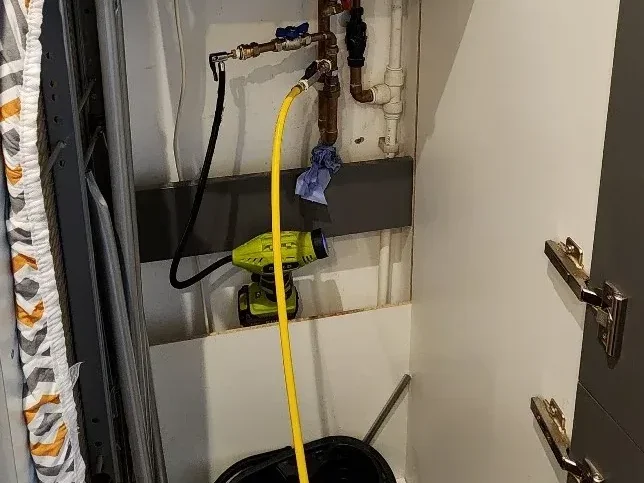 Thermal Imaging May reveal temperature patterns associated with heating pipe routes, warm water movement and affected surfaces.
 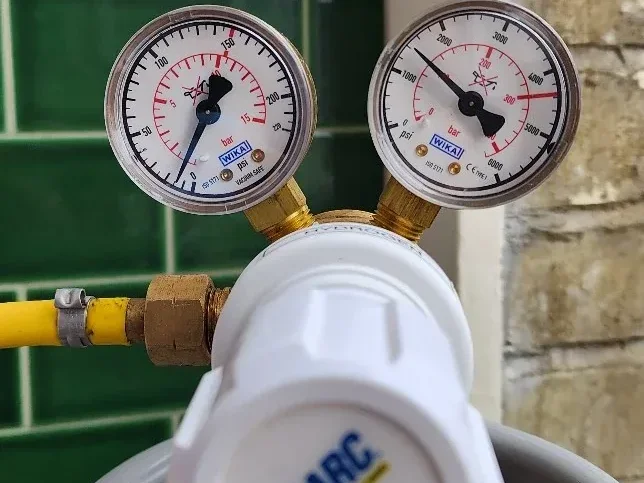 Tracer Gas Setup Can help narrow a likely escape area where the heating circuit can be isolated and tested safely.
 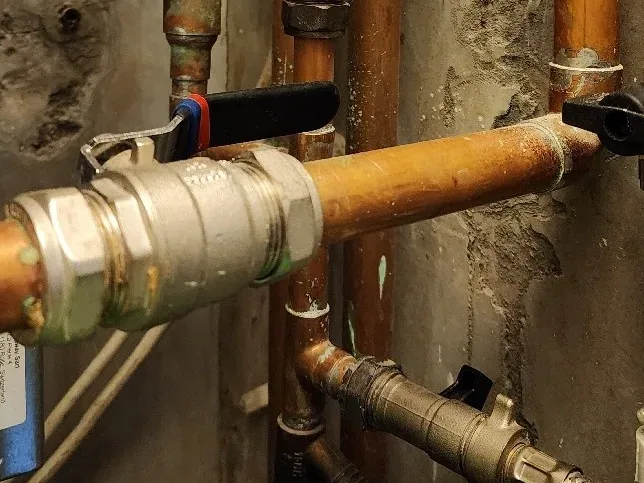 Acoustic Detection May contribute evidence where sound from a pressurised leak can be distinguished under site conditions.
 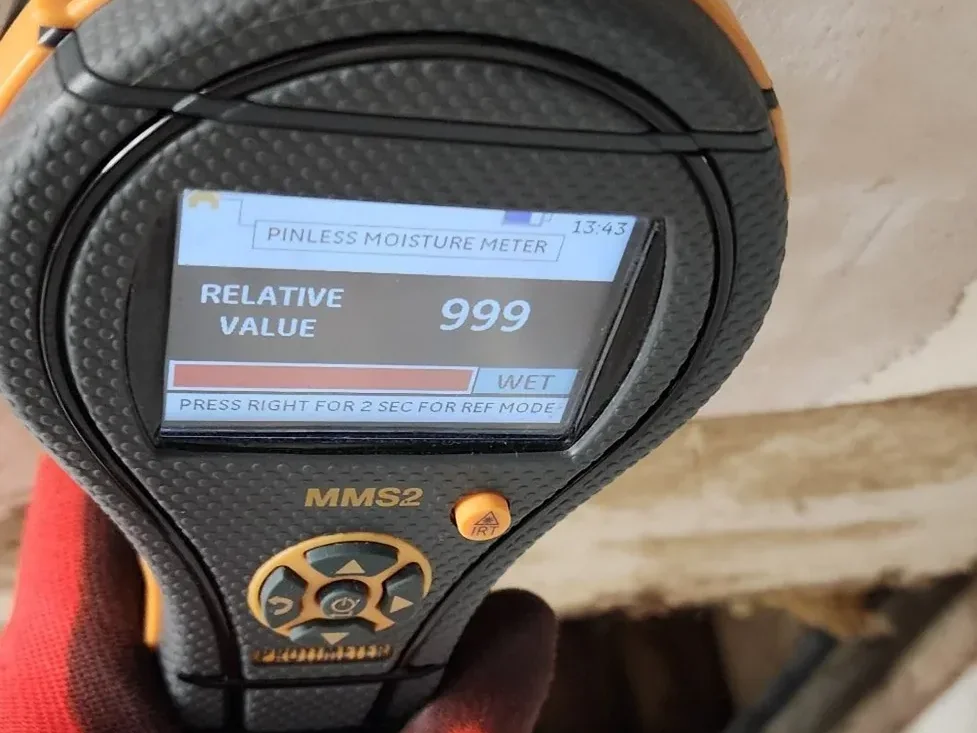 Moisture Mapping Helps record moisture extent and compare affected areas with heating pipe routes and other findings.
 Pressure history and system behaviour help determine which methods are appropriate. Not every method is used on every investigation, no technique guarantees an exact result in every case, and safe isolation or system condition may limit which tests can be completed.
Supporting Methods
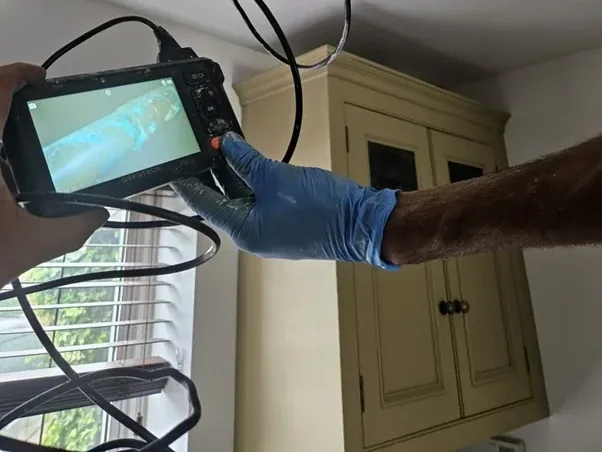
Small inspection cameras are used to visually check concealed voids, pipe routes and difficult-to-access areas before opening up.
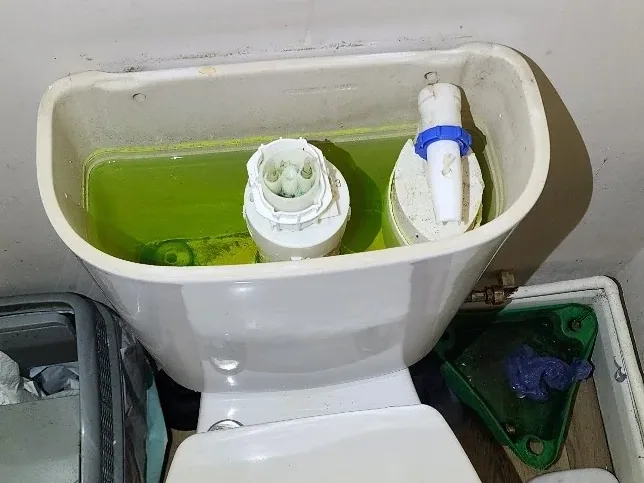
Coloured test dye can help confirm water paths, waste leaks, bathroom leaks and suspected escape routes.
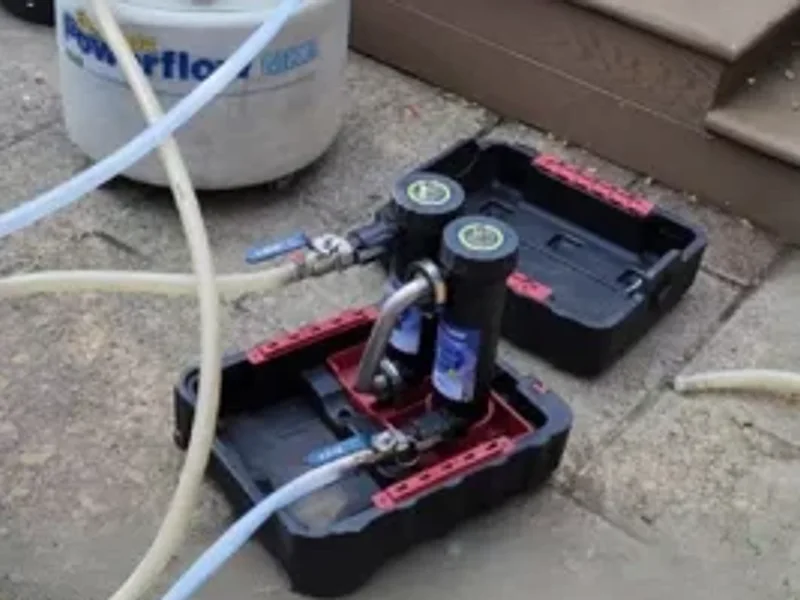
Controlled pressure testing helps identify whether sealed pipework or heating circuits are losing pressure.
Investigation Evidence
These published investigations show how different pressure-loss patterns and concealed pipework locations require different evidence-led approaches.
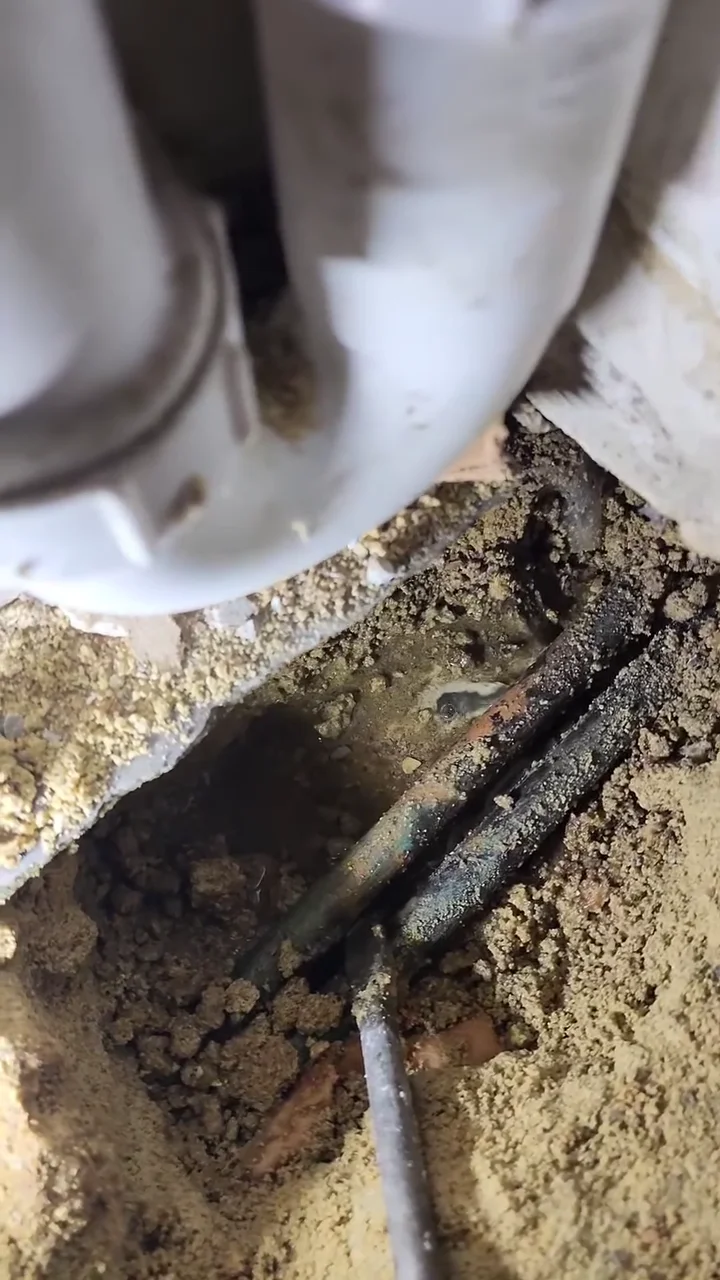
Reading, Berkshire
Central Heating LeakRapid central heating pressure loss in Reading traced and repaired after a concealed leak investigation.
Why it relates: Shows a concealed heating-circuit leak investigated after pressure was dropping within 30 minutes.
View case study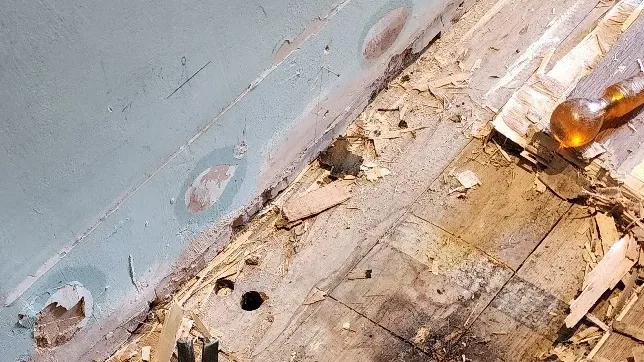
Camberley, Surrey
Central Heating LeakHeating system pressure loss traced to an intermittent hidden pipework fault beneath a floorboard.
Why it relates: Shows an intermittent hidden pipework fault that appeared only when a specific floorboard was under load.
View case study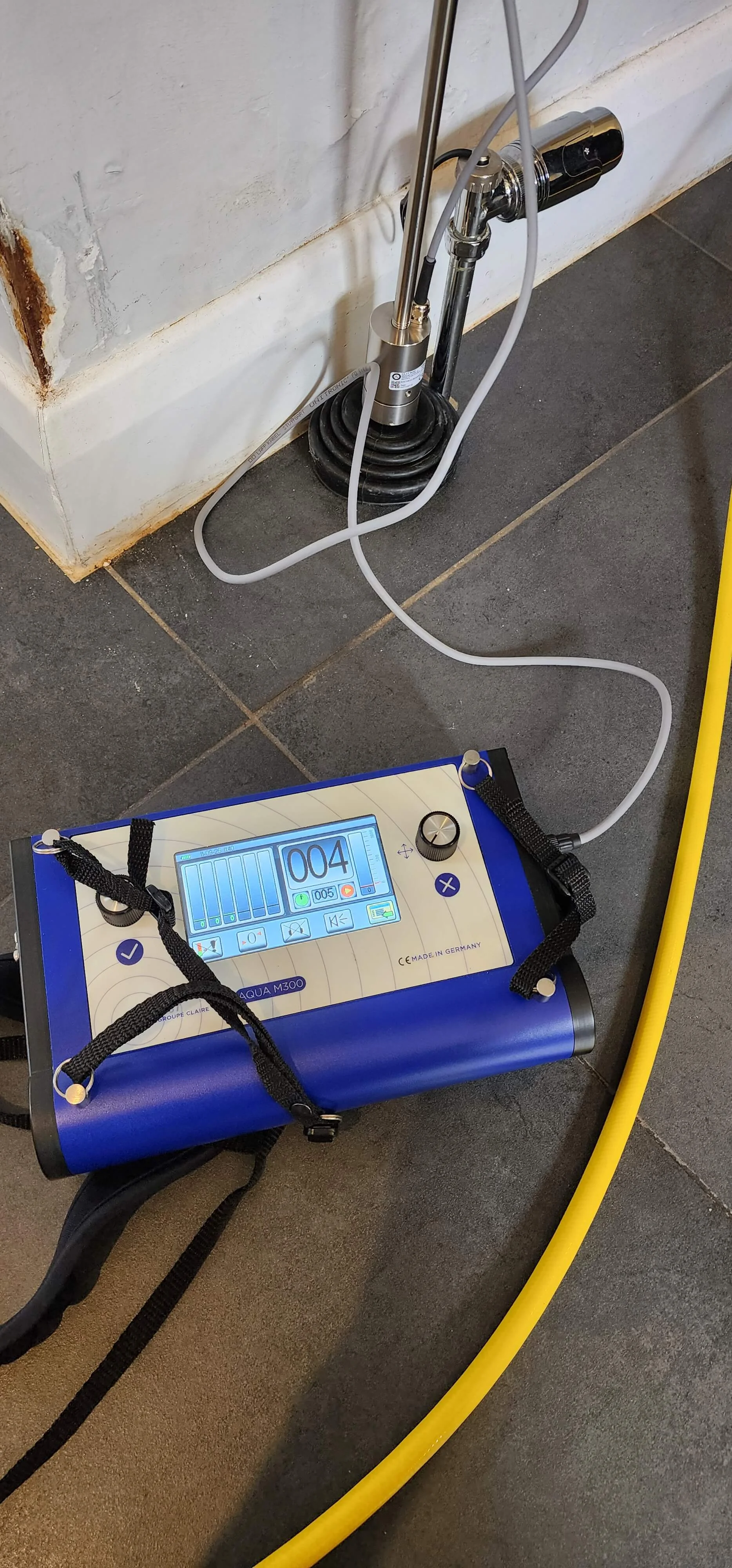
Betchworth, Surrey
Central Heating LeakA concealed central heating leak around radiator pipework in Betchworth was investigated using tracer gas, thermal imaging and pressure testing.
Why it relates: Shows targeted investigation around concealed radiator pipework using tracer gas, thermal imaging and pressure testing.
View case studyRelated Services
Specialist investigation for UFH pipework, pressure loss and damp floor symptoms.
Leak tracing and access evidence for concealed pipework and insurance claim requirements.
For communal, managed or business heating systems with wider property and stakeholder requirements.
Structured investigation for hidden leaks in pipework, floors, walls and ceilings.
For running-meter or supply-pipe symptoms that indicate water loss outside the heating circuit.
Evidence-led findings that may support insurer, loss assessor and claim requirements.
Coverage
Central heating leak detection surveys are available across London, Surrey, Berkshire, Buckinghamshire, Oxfordshire, Hampshire and Sussex for homeowners, landlords, businesses and managing agents.
FAQs
Yes. A hidden leak on the heating circuit can cause repeated boiler pressure loss or regular system top-ups, especially where pipework runs below floors or behind walls.
We use non-destructive methods such as thermal imaging, tracer gas, acoustic detection and moisture mapping where appropriate to narrow the likely leak location.
Tracer gas can be used where the system can be isolated and tested safely. It is useful for heating system leak detection where the leak is concealed.
The investigation starts with non-destructive testing. Access work is only recommended once evidence points to a likely leak position.
Yes. Written findings and photographs can support trace and access or escape of water claim requirements. Your insurer decides what is covered.
Get Expert Help
Speak to a specialist about boiler pressure loss, boiler shutdown symptoms, no heating or hot water linked to pressure loss, central heating losing pressure or a suspected hidden heating pipe leak.
Phone: 0333 577 0194 WhatsApp: Message us Email: Use the contact form