Shower waste leaks
Dye testing can help check whether water is escaping from shower waste routes, trays or nearby fittings.
Technology
Dye testing helps confirm water paths from showers, waste pipework, bathroom fittings and suspected escape routes during evidence-led leak investigations.
It is most useful when water appears intermittently, especially where symptoms show below bathrooms or only after fixtures have been used.
Google Reviews ★★★★★ 5.0 Rating 70+ Reviews Read ReviewsColoured test dye can help show where water travels from showers, wastes, fittings or suspect areas.
Useful for intermittent leaks that only appear when showers, baths, basins or toilets are used.
Dye testing helps distinguish surface water paths from concealed supply pipe or heating leaks.
Often combined with moisture mapping, thermal imaging, camera inspection or pressure testing.
Investigation method
Dye testing uses a visible coloured test dye to help confirm where water is travelling. It is commonly used during bathroom, shower, waste pipe and water ingress investigations where the route of water needs to be demonstrated.
The method is not a general drainage service. It is a diagnostic step used to support leak detection, moisture mapping and targeted repair planning.
Investigation principle
If dyed water appears at the affected area, the evidence can help connect visible symptoms with the likely source fixture, fitting or waste route.
Use cases
Dye testing can help check whether water is escaping from shower waste routes, trays or nearby fittings.
Bathrooms can be tested around baths, basins, toilets, tiled areas and suspected water paths.
Where staining appears below a bathroom, dye testing can help confirm whether water above is tracking through.
Coloured test dye can support checks around waste pipework, soil pipe routes and intermittent foul water symptoms.
Dye testing can help assess whether water is escaping from fittings, seals or routes around bathroom fixtures.
Recorded dye test evidence can support written findings where targeted access or repair planning is needed.
Advantages
Coloured dye can show whether water from a fixture is reaching the affected area.
Bathroom and waste leaks may only appear when a shower, bath, basin or toilet is used.
Clearer water path evidence can help avoid opening unrelated areas.
Dye testing can be paired with moisture readings to connect visible symptoms with likely source areas.
Results can help separate waste or seal failures from hidden supply pipe leaks or condensation.
Photographs of dye testing can support reports, repair planning and trace and access evidence.
Method limits
Dye testing is useful for confirming water paths, but it does not replace other leak detection methods. It may not locate a hidden pressurised pipe leak, a heating circuit leak or a leak that only occurs under specific pressure conditions.
Surface conditions, fixture access, existing finishes and the timing of symptoms can all affect results. For that reason, dye testing may be combined with moisture mapping, camera inspection, thermal imaging or pressure testing.
Real investigation examples
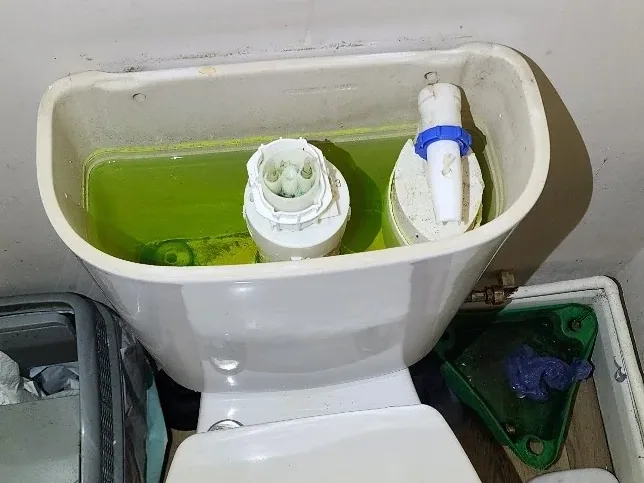
Coloured dye can help confirm whether water is travelling from a fixture to the affected area.
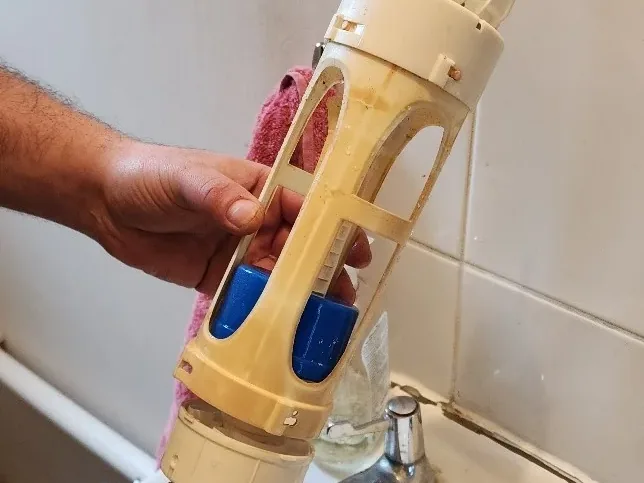
Dye testing supports investigations around showers, baths, basins and waste pipe routes.
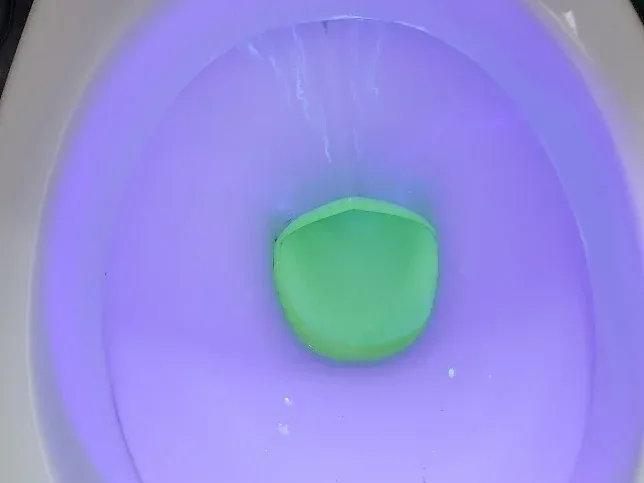
Photographic dye evidence can support targeted repair planning and written findings.
Related investigations
Published investigations where dye testing was used as part of the leak detection process.
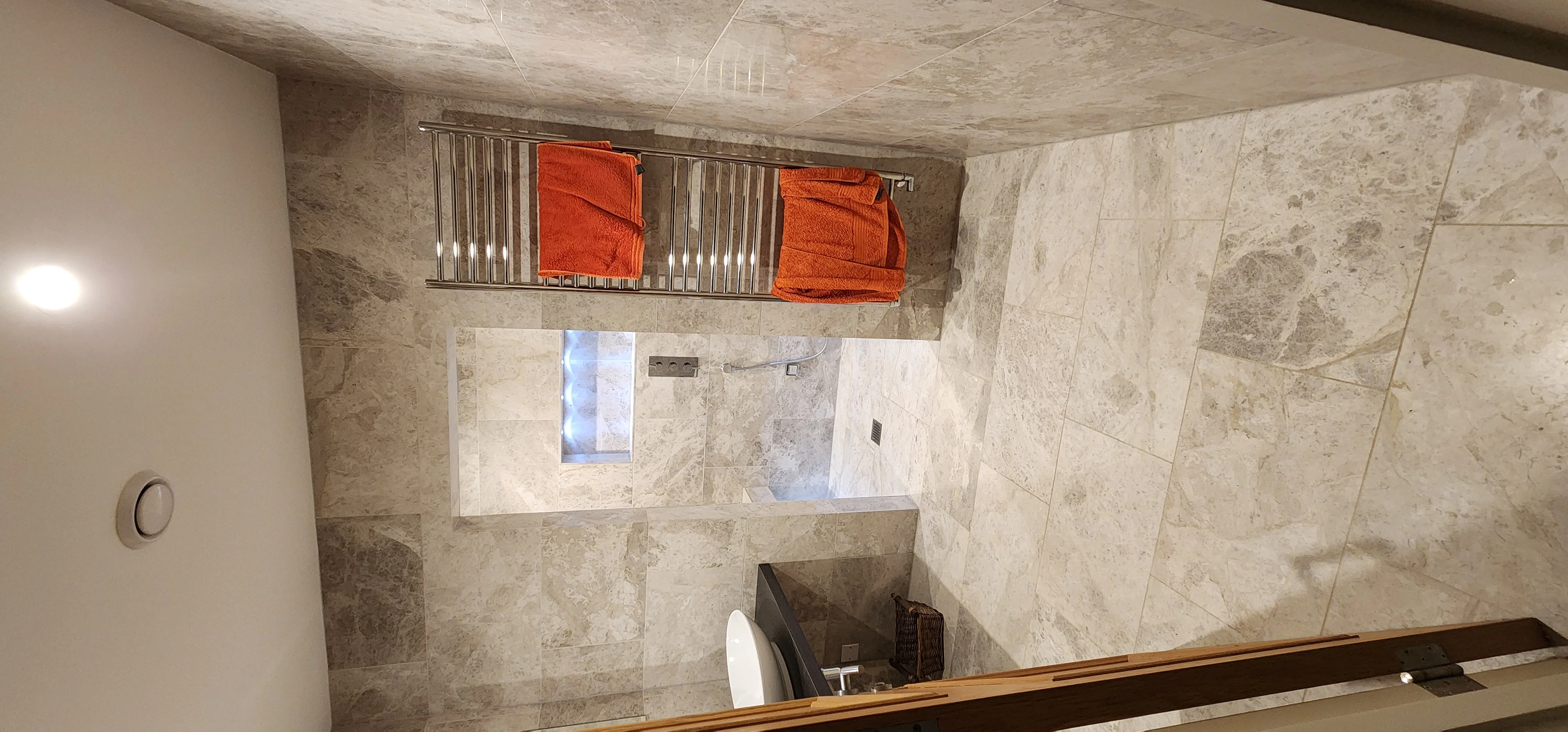
Shower Waste Leak
Shower waste leak investigation in Bramley using thermal imaging and dye testing evidence.
View investigation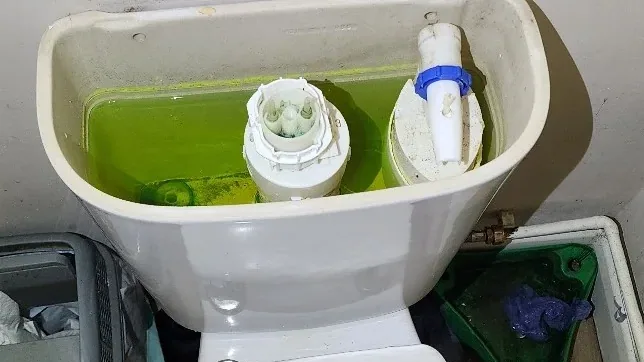
Mains Water Leak
Continuous smart meter water usage traced to a faulty toilet cistern mechanism using dye testing.
View investigationRelated problems
Ceiling staining below a bathroom may require dye testing around shower, bath or waste routes.
Damp near bathrooms, showers or fittings may need water path checks and moisture mapping.
Water tracking below bathroom floors may require dye testing alongside moisture investigation.
Dye testing can help rule in or rule out bathroom and waste routes where water use symptoms are unclear.
Related services
Investigation for hidden waste pipe, soil pipe and foul water leak symptoms around bathrooms.
Specialist bathroom leak investigation for showers, baths, fittings and concealed water ingress.
Moisture and water ingress investigation where damp may be linked to concealed leaks or water paths.
Leak tracing reports and evidence for concealed leaks and insurance-led access decisions.
FAQs
Dye testing leak detection uses coloured test dye to help confirm where water is travelling from a fixture, waste route or suspected leak area.
Dye testing can help identify water paths from showers, baths, basins, toilets and waste routes, but it may need to be combined with moisture mapping or camera inspection.
Dye testing is mainly used for water path, waste and bathroom investigations. Pressurised supply pipe leaks usually need methods such as tracer gas, acoustic detection or pressure testing.
Where relevant, dye testing can provide photographic evidence and method notes to support trace and access findings or repair planning.
Dye testing is normally non-destructive, but the engineer will assess the fixture, surface and suspected route before using it.
Request a survey
Speak to a specialist if water is appearing below a bathroom, around a shower, near waste pipework or along a suspected escape route.