
5.0★ Google Rating
Trusted by homeowners, landlords and businesses.
Insurance Leak Investigation
Professional leak investigation and insurance reporting.
Trace & Access combines specialist leak detection with evidence gathering to identify the likely leak location and justified access area before unnecessary opening-up work. The documented findings may support repair planning or an insurance claim, while the policy provider decides what is covered.
Google Reviews ★★★★★ 5.0 Rating 70+ Reviews Read ReviewsTrusted by homeowners, landlords and businesses.
Written findings and photographic evidence provided.
London, Surrey, Berkshire, Buckinghamshire, Oxfordshire, Hampshire and Sussex.
Thermal imaging, tracer gas and acoustic detection methods.
What It Means
Trace and access combines investigation with evidence gathering: the leak is traced, the likely source is documented and the access that may be needed to expose it is identified. It is used when symptoms are visible but the source itself is concealed or uncertain.
This differs from ordinary leak detection where the immediate requirement may be location alone. A Trace & Access instruction also considers photographs, reporting, access planning and the information required by the customer, insurer, managing agent or repair contractor.
Physical opening-up, permanent repair and reinstatement depend on the situation and are not automatically included. Where insurance is involved, the report provides technical evidence; the insurer remains responsible for interpreting the policy and deciding cover.
When It Helps
Visible staining or damp needs tracing back to the actual source before repair work is planned.
Repeated pressure loss can indicate a concealed heating pipe leak that requires diagnostic evidence.
A sudden usage increase can point to a hidden mains or supply pipe leak below floors or outside.
Technical findings may help an insurer review the cause, likely location and appropriate next steps.
Managed buildings need clear reporting for landlords, leaseholders, facilities teams and contractors.
Moisture below floor finishes should be mapped before lifting materials or opening up the structure.
Symptoms
These symptoms can have several causes. Where the source remains concealed or uncertain, investigation evidence can help determine the appropriate access or repair route.
Continued meter movement with outlets off may justify checks before a concealed supply route is investigated.
Unexpected usage can point to an active supply leak hidden below floors or outside the property.
New damp marks need methodical moisture mapping before opening up walls or ceilings.
Ceiling staining can come from pipework, bathrooms, heating systems or roof-level sources.
Safe preliminary checks can sometimes clarify the next step. Use the water-meter leak test guide for unexplained meter movement, or review how to check for a hidden water leak when the source is not visible.
Process
We review symptoms, building layout, system history and any insurance requirements.
Suitable non-destructive methods are selected to gather evidence around the suspected system and area.
Findings are correlated to narrow the likely leak source and the access that may be justified.
Written findings, photographs and recommendations support access or repair planning by the appropriate contractor.
Report Detail
Investigation Methods
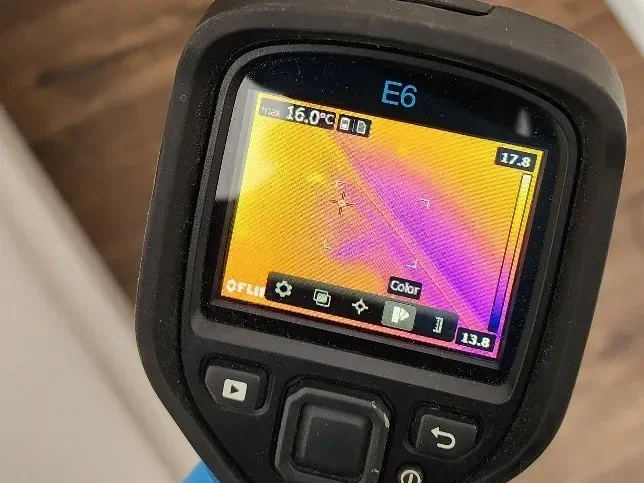 Thermal Imaging May reveal temperature patterns that help compare affected surfaces with concealed pipe routes.
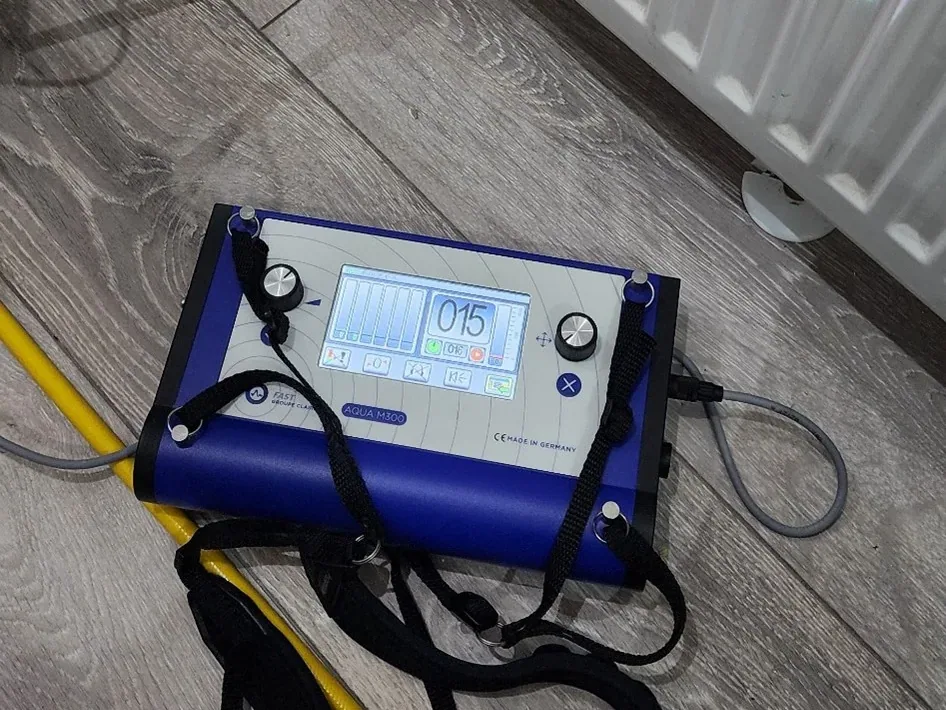
 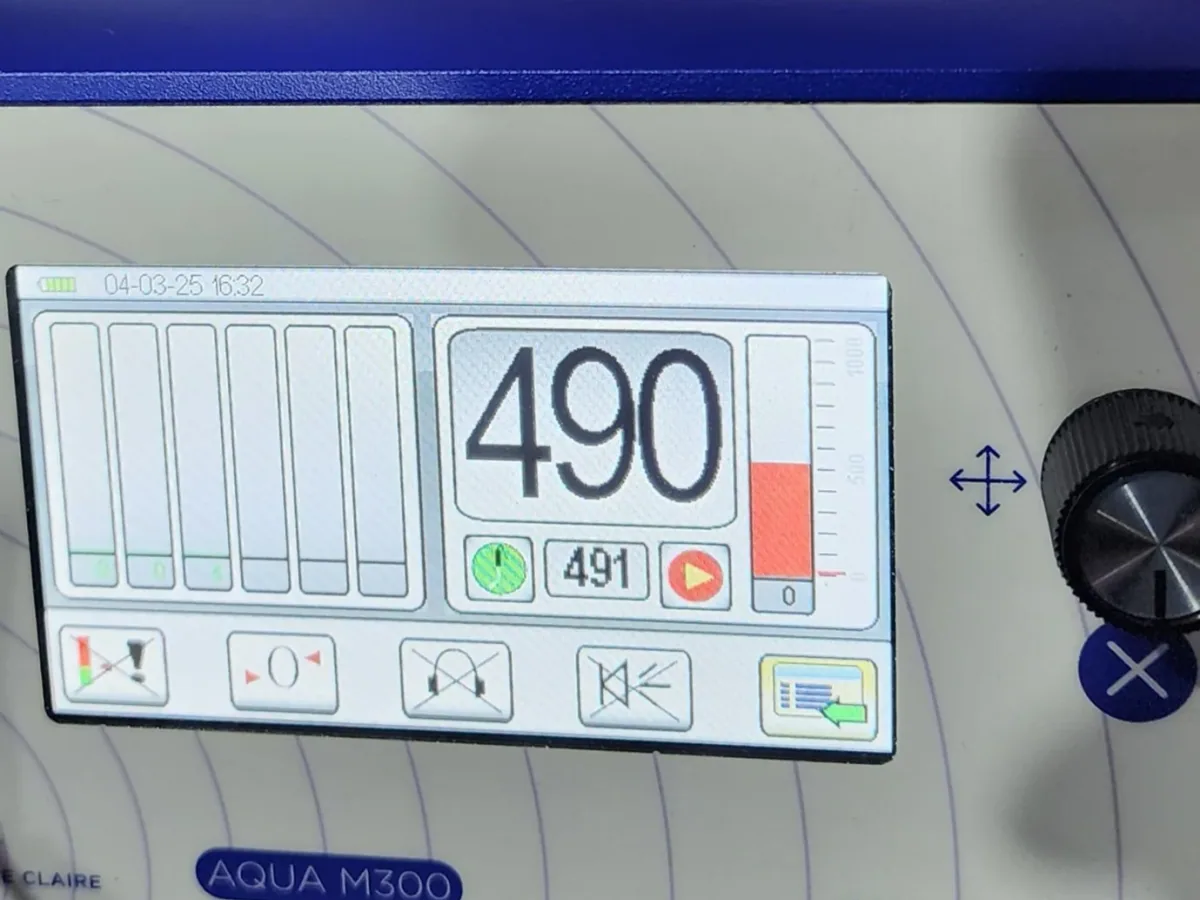 Acoustic Detection May contribute location evidence where sound from a pressurised leak can be distinguished on site.
  Tracer Gas Can help narrow a likely escape area where suitable pipework can be isolated and tested safely.
 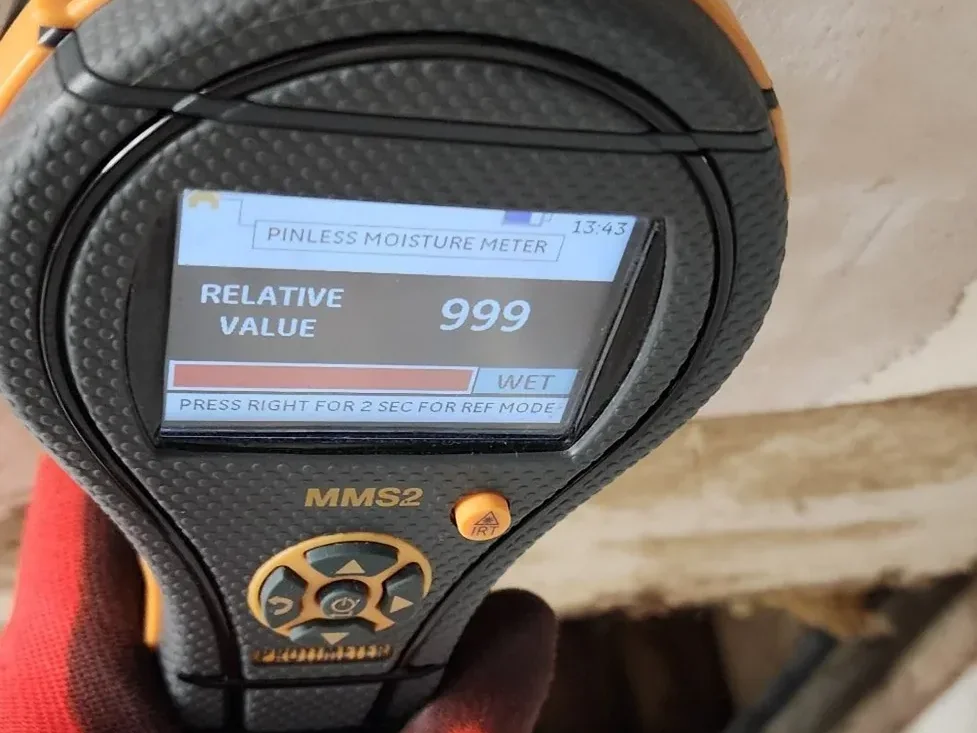 Moisture Mapping Helps record moisture distribution so it can be interpreted alongside pipe routes and other findings.
 Methods are selected according to the symptoms, affected system, building construction and access available. Several findings may be considered together, and no single technique is appropriate for every investigation.
Supporting Methods
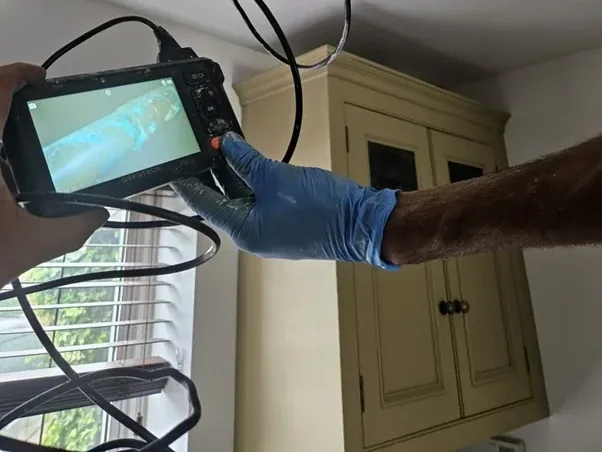
Small inspection cameras are used to visually check concealed voids, pipe routes and difficult-to-access areas before opening up.
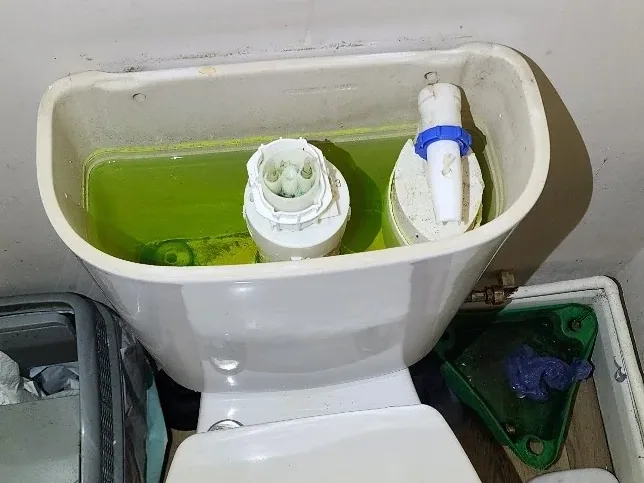
Coloured test dye can help confirm water paths, waste leaks, bathroom leaks and suspected escape routes.
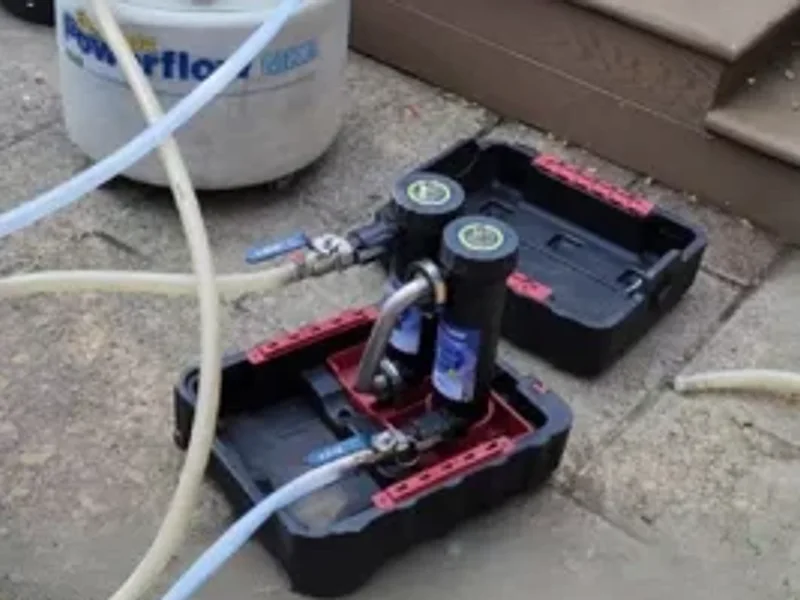
Controlled pressure testing helps identify whether sealed pipework or heating circuits are losing pressure.
Investigation Evidence
These published cases show different evidence-led outcomes: focusing access beneath flooring, ruling out a concealed pipe defect and documenting findings for a repair specialist. They are not presented as confirmation of insurer involvement.
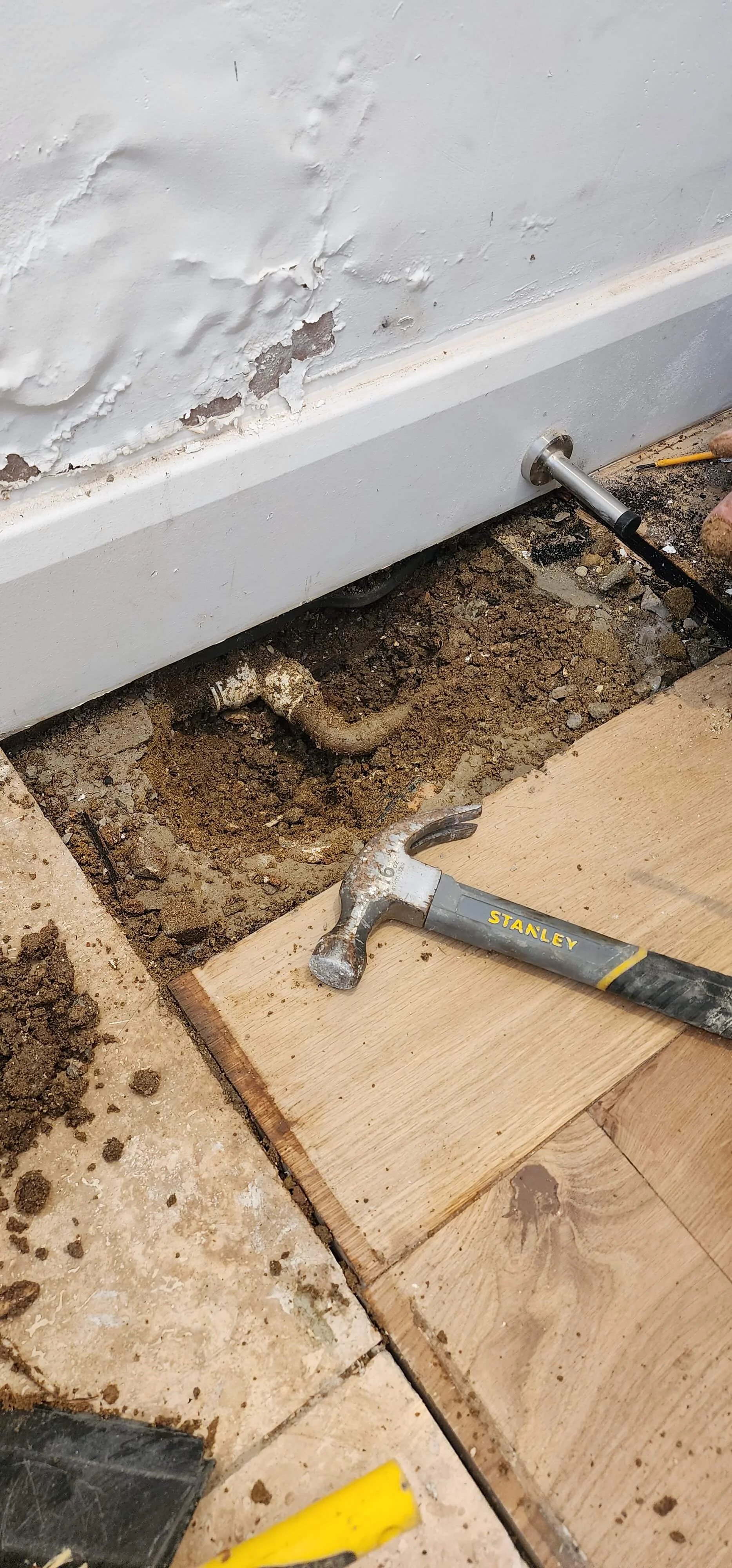
Ascot, Berkshire
Mains Water LeakAn Ascot mains water leak investigation used moisture, thermal and tracer gas methods to trace concealed pipework beneath flooring.
Why it relates: Shows evidence-led tracing beneath flooring before access was focused on the affected supply-pipe area.
View case study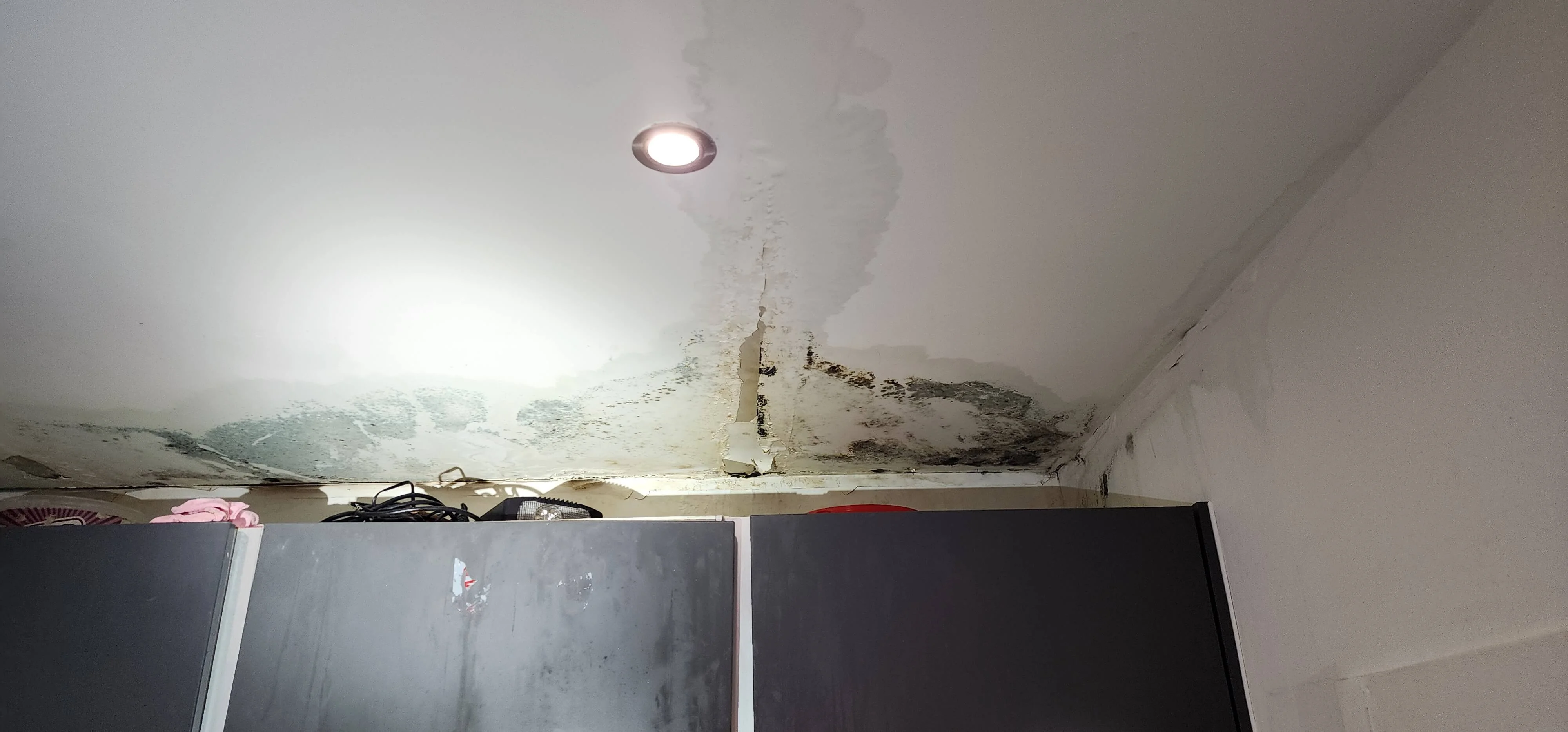
Barnet, London
Failed Bathtub SiliconeWater through a ceiling in Barnet was traced to failed bathtub silicone after specialist bathroom leak investigation.
Why it relates: Shows how testing separated a failed bath seal from a concealed pipe defect, avoiding unnecessary wider access.
View case study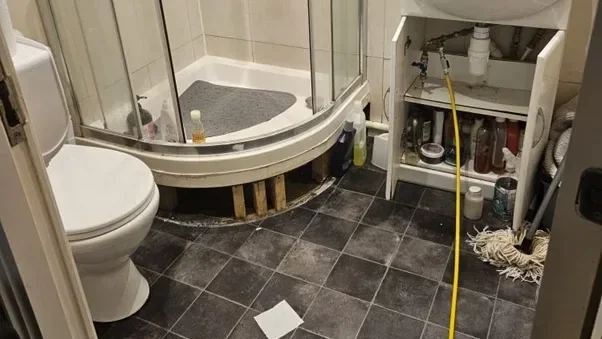
Fareham, Hampshire
Failed Shower Seal And Cracked Tile GroutWater ingress below a shower was traced to failed silicone sealant and cracked tile grout.
Why it relates: Shows documented findings and a same-day report that directed the appropriate bathroom specialist to the next step.
View case studyRelated Services
Structured investigation for hidden leaks in pipework, floors, walls and ceilings.
Investigation planned around commercial access, occupancy, reporting and stakeholder requirements.
Specialist investigation for private supply pipes, external water loss and running-meter symptoms.
Investigation for concealed heating circuits, pressure loss and hidden heating pipework.
Broader evidence-led investigation where insurer, loss assessor or claim requirements shape the instruction.
Coverage
Trace and access leak detection surveys are available across London, Surrey, Berkshire, Buckinghamshire, Oxfordshire, Hampshire and Sussex for residential, commercial and managing agent instructions.
FAQs
Trace and access means locating the source of a hidden leak and identifying the access needed to expose it for repair. The trace stage is the investigation; access is the opening-up required after evidence has been gathered.
No. Trace and access is a diagnostic investigation used to locate and document a leak. Plumbing repair is the separate work required to fix the pipe, fitting or system after the leak has been identified.
Yes. We provide written findings and photographic evidence that can support insurer, loss assessor or managing agent requirements. Your policy provider decides what is covered.
The investigation starts with non-destructive methods such as thermal imaging, tracer gas, acoustic detection and moisture mapping. Access work is only recommended once evidence points to a likely leak location.
We cover London, Surrey, Berkshire, Buckinghamshire, Oxfordshire, Hampshire and Sussex for residential, landlord, managing agent and commercial trace and access investigations.
Get Expert Help
Speak to a specialist about the symptoms, insurance position and access requirements for your property.
Phone: 0333 577 0194 WhatsApp: Message us Email: Use the contact form