
Water usage has changed
A high bill, supplier alert or moving meter can indicate water is passing through the system when it should not be.
Leak Detection Guide
To find a hidden water leak in your house, start with evidence you can collect safely: check the meter when no water is in use, rule out toilets, appliances, taps and visible fittings, then record any damp, staining, unusual sounds or floor changes.
These signs can show that further investigation is justified, but they do not identify the source by themselves. This guide explains what the results may mean and when a plumber or specialist leak detection engineer is the appropriate next step.
Guide
A hidden water leak is a leak that is not immediately visible from an accessible tap, valve, appliance, radiator or exposed pipe. It may be behind a wall, beneath flooring, under concrete, within boxing, below ground or inside a pipe route that cannot be inspected visually.
Hidden leaks can involve cold water supplies, hot water pipework, central heating circuits, underfloor heating, bathroom pipework or waste routes. The symptoms can overlap, which is why the first task is not to guess the exact source but to gather useful evidence.
This guide helps you separate obvious water use from signs that may need structured investigation. It cannot confirm every leak, but it can help you decide whether monitoring, a repair, a plumber or specialist leak detection is the sensible next step.
Preparation
The goal is to gather evidence safely. Do not open walls, lift flooring or dismantle fittings to prove a leak.
Before You Start
Use these signs as clues rather than proof. Their timing, location and whether they appear together can help identify which system needs checking.
A high bill, supplier alert or moving meter can indicate water is passing through the system when it should not be.
New damp patches, ceiling stains, peeling finishes, musty smells or moisture below flooring can be linked to leaks, but condensation, water ingress and other causes must also be considered.
Repeated boiler or central heating pressure loss may indicate a sealed-system fault, visible leak or concealed heating pipe leak.
Intermittent sounds, damp or floor changes can still be meaningful, especially when they return after drying or when normal water use has been ruled out.
Step By Step
Write down what you first noticed, where it appears and when it changes. Photos with dates help show whether damp, staining or meter readings are changing.
Look around taps, toilet cisterns and pans, appliance hoses, sink cupboards, radiators, valves, cylinders, manifolds and exposed pipework. Listen for filling or trickling and do not remove panels or lift flooring.
Confirm the meter serves your property, turn off taps and water-using appliances, then record the reading and flow indicator without using water. Continued movement can be an important clue, but the source still needs to be established.
Check for passing toilets, dripping taps, appliance cycles, water softeners, outside taps and irrigation before assuming there is a concealed pipe leak.
Treat repeated boiler-pressure loss as a heating-system issue. Compare cold readings over time and check visible heating components rather than using a water-meter result to diagnose the sealed circuit.
Check whether damp, staining, musty smells, warm or cold patches, swelling or warped flooring are spreading or recurring. Water can track through materials, so the visible symptom may be away from the source.
Compare
The investigation begins with the symptoms, the affected system and accessible checks. A plumber may resolve a visible fault; where the source remains concealed, a leak detection engineer selects methods that suit the property and site conditions. Several methods may be combined, and none guarantees an exact result in every situation.
| Method | What it can help assess | Important limitation |
|---|---|---|
| Water-meter testing | Checks whether water continues passing through the metered supply when known use is off. | It indicates flow, not the location or cause. |
| Pressure testing | Assesses whether an isolated pipework section holds pressure as expected. | The system must be suitable for isolation and testing. |
| Thermal imaging | Identifies temperature patterns that may relate to hot-water, heating or moisture movement. | A temperature difference is evidence to interpret, not proof of a leak. |
| Acoustic detection | Listens for sound produced by water escaping from pressurised pipework. | Pipe material, pressure and background noise affect what can be detected. |
| Tracer gas | Helps investigate suitable concealed or underground pipework after the system is prepared. | Not every system can be isolated or tested this way. |
| Moisture mapping | Shows how moisture is distributed through affected materials and where it may have travelled. | It does not by itself identify which system released the water. |
| Visual or endoscopic inspection | Checks accessible areas or suitable voids for direct evidence with limited access. | Only areas within the camera's accessible field can be examined. |
Compare
Use this table to connect common warning signs with the checks that usually make sense first.
| Symptom | What it may mean | Useful first check |
|---|---|---|
| Water meter moves with outlets off | Water may still be passing through the supply. | Check toilets, appliances, outside taps and then carry out a meter leak test. |
| High water bill with no visible leak | Usage may be unexplained, internal, external or hidden. | Compare readings and review whether occupancy, appliances or meter movement explain the increase. |
| Damp patch or ceiling stain | Water may be tracking from a pipe, bathroom, roof, condensation or another moisture source. | Photograph the area, monitor changes and compare with nearby water routes. |
| Boiler pressure keeps dropping | A heating-system fault or concealed heating pipe leak may be possible. | Compare cold pressure readings and check visible radiators, valves and pipework. |
Decision Guide
Use the strongest symptom to choose the most useful next page.
Meter movement when water should be off is usually the clearest starting point for supply-side water loss.
Next step
Read the water meter leak test guide.Damp and staining need careful interpretation because several moisture sources can look similar.
Next step
Read the damp patch guide.Repeated pressure loss should be assessed as a heating-system issue before assuming a mains water leak.
Next step
Read the boiler pressure check guide.Interpretation
The strongest evidence usually comes from combining observations. One symptom rarely proves the source by itself.
This can indicate ongoing water use or leakage. Toilets, appliances and outside supplies should be ruled out before assuming an underground or concealed pipe leak.
Damp may be linked to a concealed leak, but condensation, penetrating damp, roof issues or water tracking from another area may also be possible.
Repeated pressure loss can point to a boiler component fault, visible radiator or valve leak, concealed heating pipe leak or underfloor heating issue. It is separate from mains-water use and needs a heating-system assessment.
A moving meter, high bill, damp area or recurring pressure issue together provides stronger evidence than any single sign alone.
Avoid Mistakes
Damp can have several causes. Treat it as evidence to investigate, not proof of a hidden water leak.
Toilets, appliances, outside taps and normal household use can explain meter movement. Rule these out before drawing conclusions.
Access work without evidence can create unnecessary disruption and may still miss the leak source.
Water can track through floors, ceilings and voids before showing visibly. The stain or damp patch may not be directly below the leak.
When To Get Help
If water movement continues after toilets, appliances and outlets have been ruled out, mains or concealed water leak detection may be appropriate.
Persistent or spreading moisture should be investigated before larger areas are opened or finishes are replaced.
If repeated pressure loss cannot be explained by visible heating faults, concealed heating pipework may need investigation.
A plumber may be sufficient for an accessible fault. When pipework is concealed or several systems could be involved, an evidence-led specialist investigation can narrow the likely source before access work begins.
Next Step
Choose the next step based on the strongest evidence you have gathered, not on a single symptom in isolation.
Arrange an appropriate repair for the accessible fault. Leak detection is usually most useful when the source is hidden or uncertain.
Read the water meter and water meter leak test guides, then consider mains water leak detection if internal use is ruled out.
Compare related symptom guides and consider damp investigation or moisture mapping if the source is unclear.
A water leak detection investigation can help narrow the likely source and provide evidence for targeted access rather than speculative opening-up.
The findings can be passed to the appropriate repair contractor so access and repair can be planned. Further confirmation may sometimes be needed once the area is exposed, and affected materials should be assessed only after the cause has been addressed.
Useful Next Steps
Non-destructive investigation for concealed leaks inside properties where the source is hidden or uncertain.
Investigation for running meters, high water bills and suspected external or underground supply pipe leaks.
Moisture-led investigation for damp patches, staining and suspected water ingress or concealed moisture movement.
Investigation for repeated boiler-pressure loss and suspected concealed leaks within sealed heating circuits.
Specialist investigation where pressure loss or floor symptoms may involve concealed underfloor heating pipework.
Related Investigations
Published investigations where hidden leaks, water usage, damp symptoms or concealed pipework required evidence-led diagnosis.
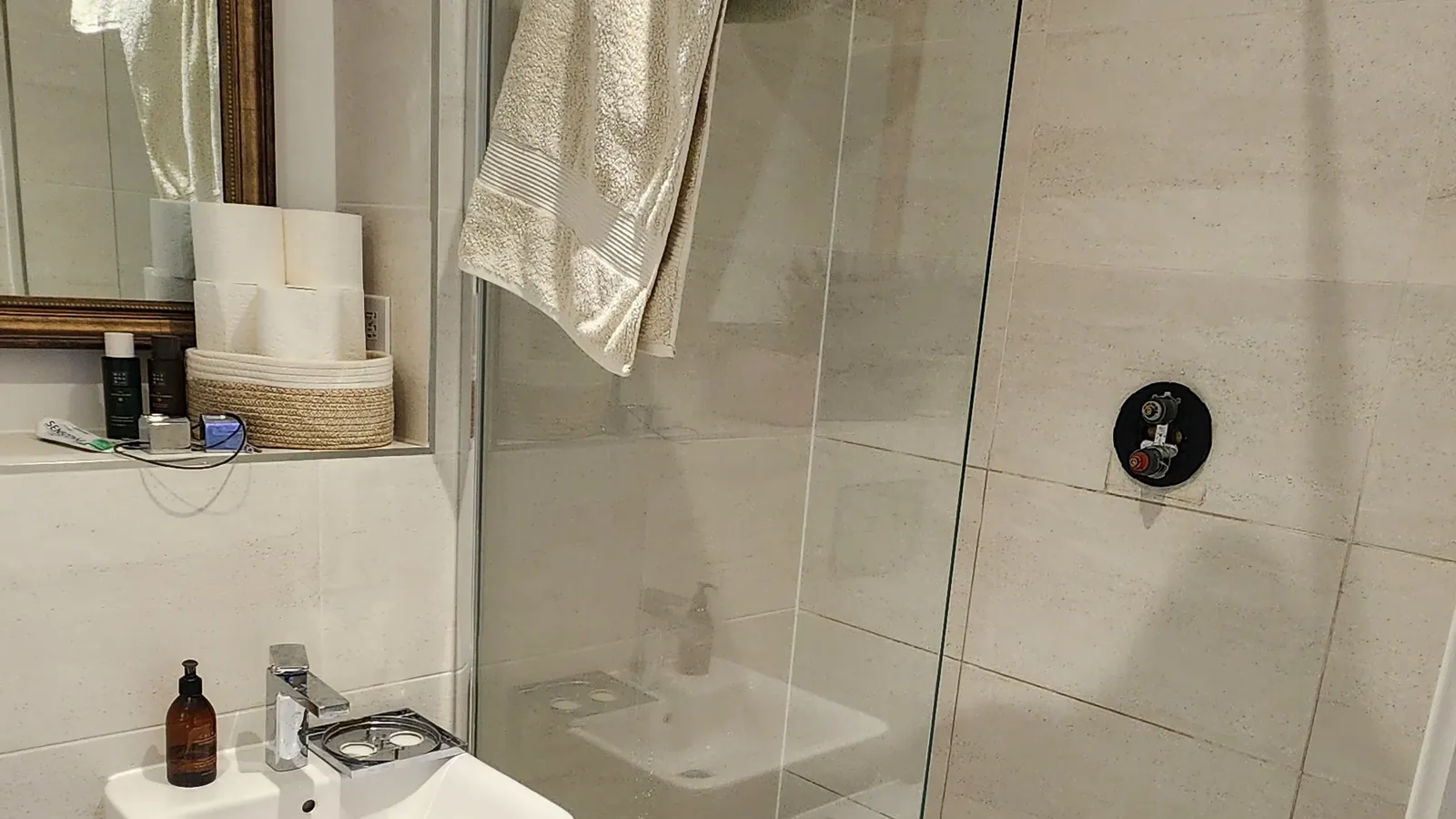
Bathroom Leak
Water reaching the flat below was traced to an ensuite shower room after the bathroom initially suspected by the client was ruled out.
View investigation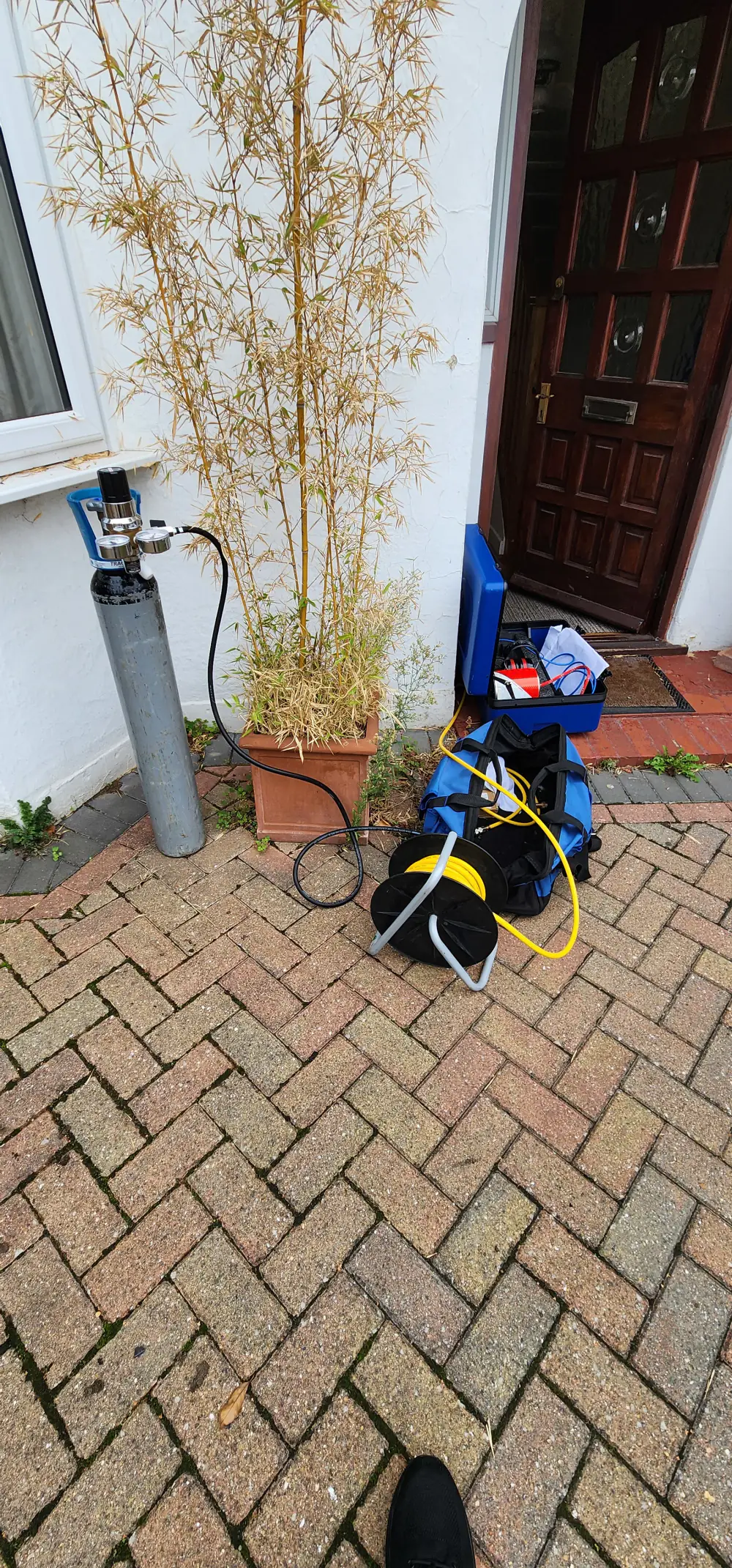
Mains Water Leak
A large bill inconsistent with reported low usage led to testing that confirmed a leak near the water meter for repair planning.
View investigation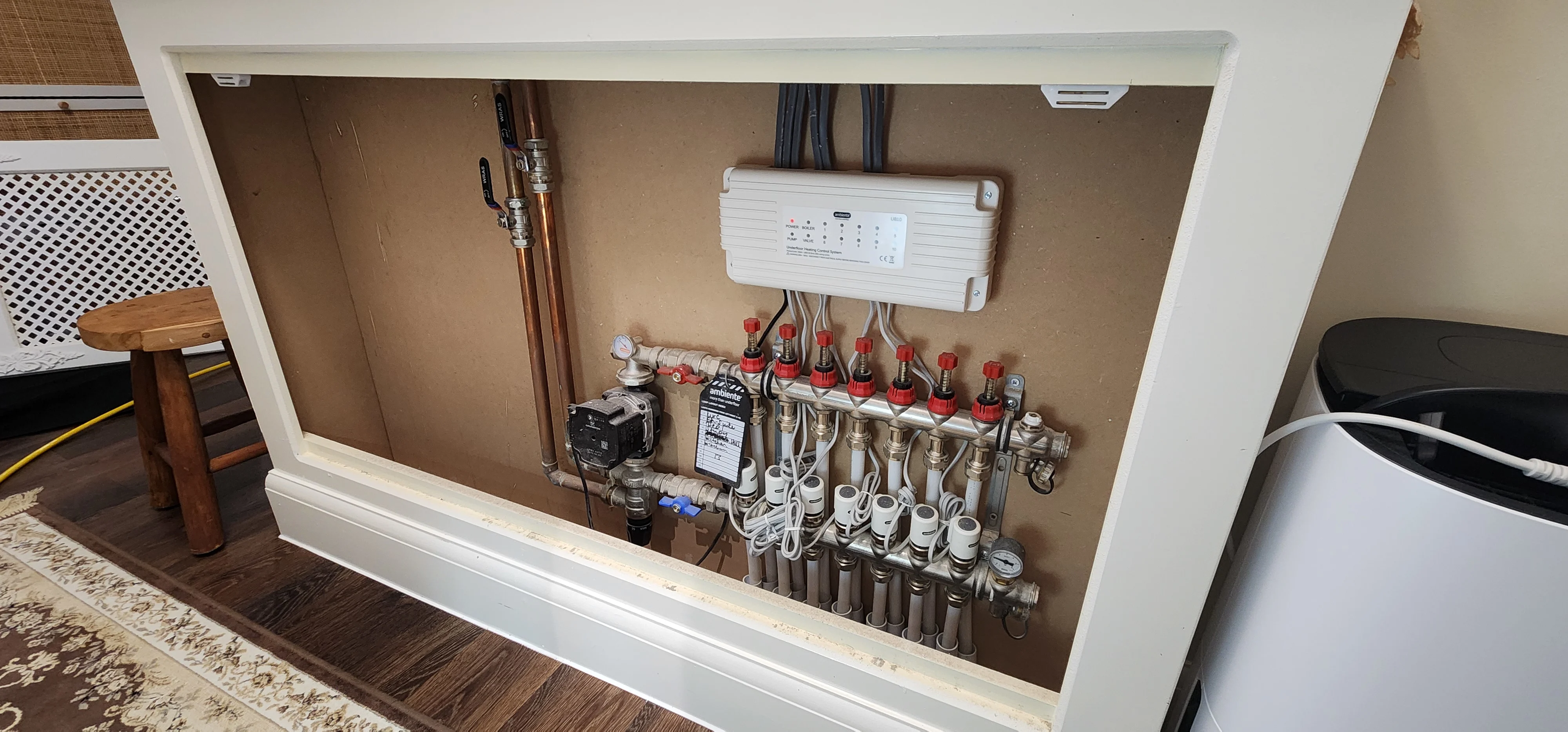
Plumbing Leak Investigation
Heating, hot-water and cold-water circuits were tested after water ingress was reported below; no plumbing leak evidence was found during the visit.
View investigationFAQs
Look for unexplained meter movement, higher water use, damp or staining, running-water sounds, musty smells and changes to floors or finishes. These signs can justify further checks, but they do not prove the source on their own.
Confirm the meter serves your property, switch off taps and water-using appliances, avoid using water, then record the meter reading and flow indicator. Continued movement may indicate ongoing use or leakage, so toilets, appliances and outside supplies should be ruled out before drawing a conclusion.
They start by reviewing the symptoms and checking accessible plumbing. Depending on the system and property, a plumber or leak detection engineer may then use meter testing, pressure testing, thermal imaging, acoustic detection, tracer gas, moisture mapping or a visual or endoscopic inspection. No single method suits every leak.
Non-destructive methods can often narrow down a likely source area before access is planned, but they cannot guarantee that every leak will be located exactly without any opening-up. Property construction, pipe condition and site access can affect the result.
Call a plumber when the fault is visible or readily accessible. Specialist leak detection may be appropriate when the source is concealed, the symptom appears away from the likely source or opening walls and floors without better evidence would risk unnecessary damage.
Speak To A Specialist
If safe checks do not explain the symptoms, our engineers can review the evidence and recommend the most appropriate leak detection route.
Phone: 0333 577 0194 WhatsApp: Message us Email: Use the contact form