
Mains water leaks
Tracer gas can help locate leaks on incoming supply pipe routes, especially where water is escaping underground.
Technology
Tracer gas leak detection uses a safe specialist gas mixture to help locate hidden leaks in pipework, heating systems, mains water supplies and underground services.
It is particularly useful when leaks are concealed beneath floors, behind walls, below concrete or within external supply pipe routes.
Google Reviews ★★★★★ 5.0 Rating 70+ Reviews Read ReviewsTracer gas can help detect small leaks where visual inspection is not enough.
Testing is used before unnecessary excavation, floor removal or opening-up work.
Useful for pipework concealed below floors, behind walls, under concrete or externally.
Tracer gas results can support written findings, photographs and repair planning.
Investigation method
Tracer gas leak detection is a specialist method used to locate leaks in pipework that is hidden from view. A safe test gas mixture is introduced into isolated pipework under controlled conditions.
If there is a leak, gas escapes at the leak point. A sensitive detector, often called a sniffer, is then used above floors, walls, concrete, ground surfaces or service routes to identify the likely leak location.
This makes tracer gas especially useful when pipework is concealed and visible signs are limited, including underground supply pipes, heating circuits and hidden internal pipe runs.
Investigation principle
A sensitive sniffer is used to identify where tracer gas escapes from isolated pipework, helping engineers narrow the leak location before access or repair work is planned.
Use cases
Tracer gas is typically used when leaks are hidden, access is limited or another investigation method needs to be supported with additional evidence.
Tracer gas can help locate leaks on incoming supply pipe routes, especially where water is escaping underground.
Gas testing may be used where UFH pipework is concealed and thermal imaging alone is inconclusive.
Suitable isolated heating circuits can be tested to help locate hidden pipework leaks and pressure loss.
Tracer gas can migrate from a leak point through suitable surfaces, helping narrow the likely location.
External pipe routes, driveways, paths and garden areas can be investigated before excavation is planned.
Tracer gas can provide evidence for concealed leak location before access work is recommended.
Advantages
Tracer gas can help identify small leaks that may not be visible during a standard inspection.
The method supports investigation before unnecessary floor removal, excavation or opening-up.
Concealed pipe routes can be tested when the system can be isolated and prepared correctly.
Gas migration can help narrow leak locations beneath floors, concrete and external surfaces.
Findings can contribute to trace and access reports, photographs and written evidence.
Targeted investigation helps repairs focus on the most likely leak area.
Method limits
Tracer gas is highly effective, but the system being tested usually needs to be isolated and suitable for pressure testing. Access to pipework, valves or connection points may be required before the test can be carried out.
Results can also be affected by surface conditions, pipe depth, ventilation, airflow and how the gas can migrate from the leak point. In some investigations, tracer gas is used alongside acoustic detection, thermal imaging or moisture mapping to build a more reliable picture.
Real investigation examples
These images show tracer gas equipment and investigation methods used to support hidden pipe leak detection.
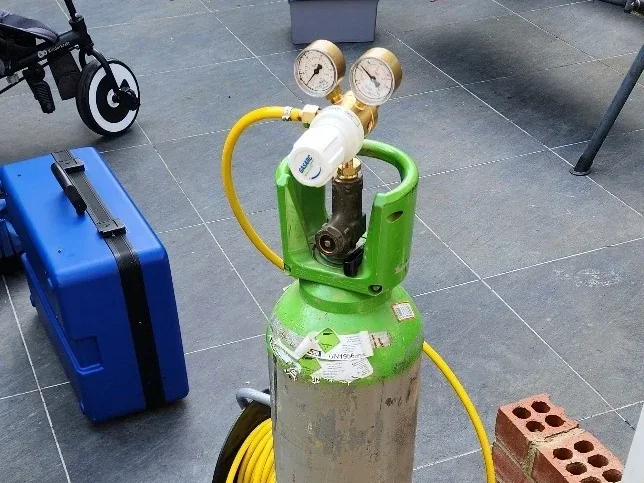
Specialist tracer gas equipment prepared for pipework leak testing.
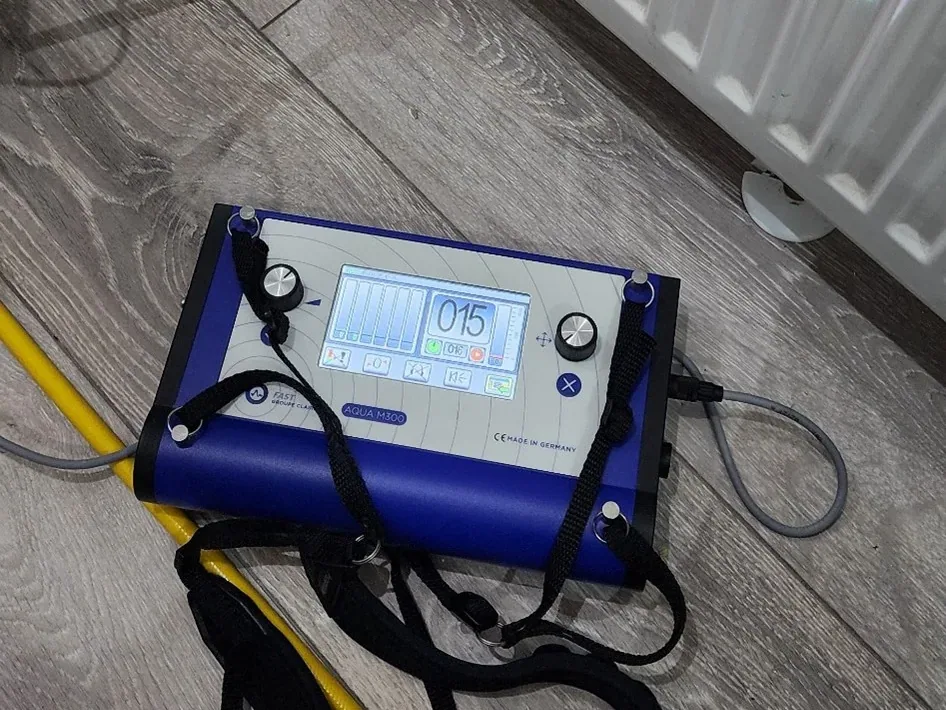
Tracer gas testing helps identify concealed leak locations where visual inspection is not enough.
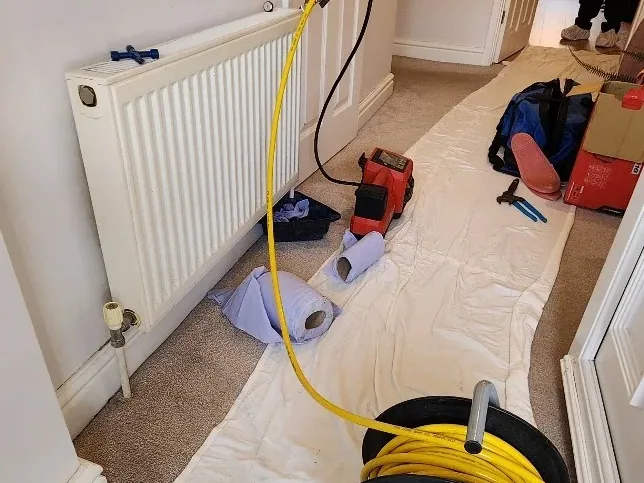
Gas testing can be arranged around suitable pipe isolation and access conditions.
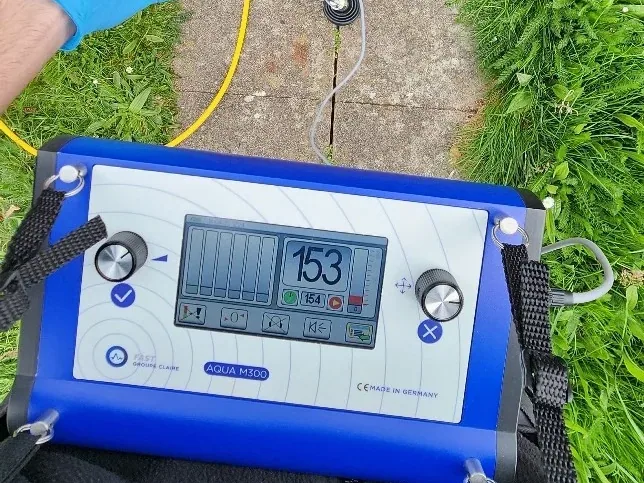
Sensitive detection equipment is used to identify where tracer gas escapes from the leak point.
Related investigations
Published investigations where tracer gas testing was used to help locate concealed leaks.
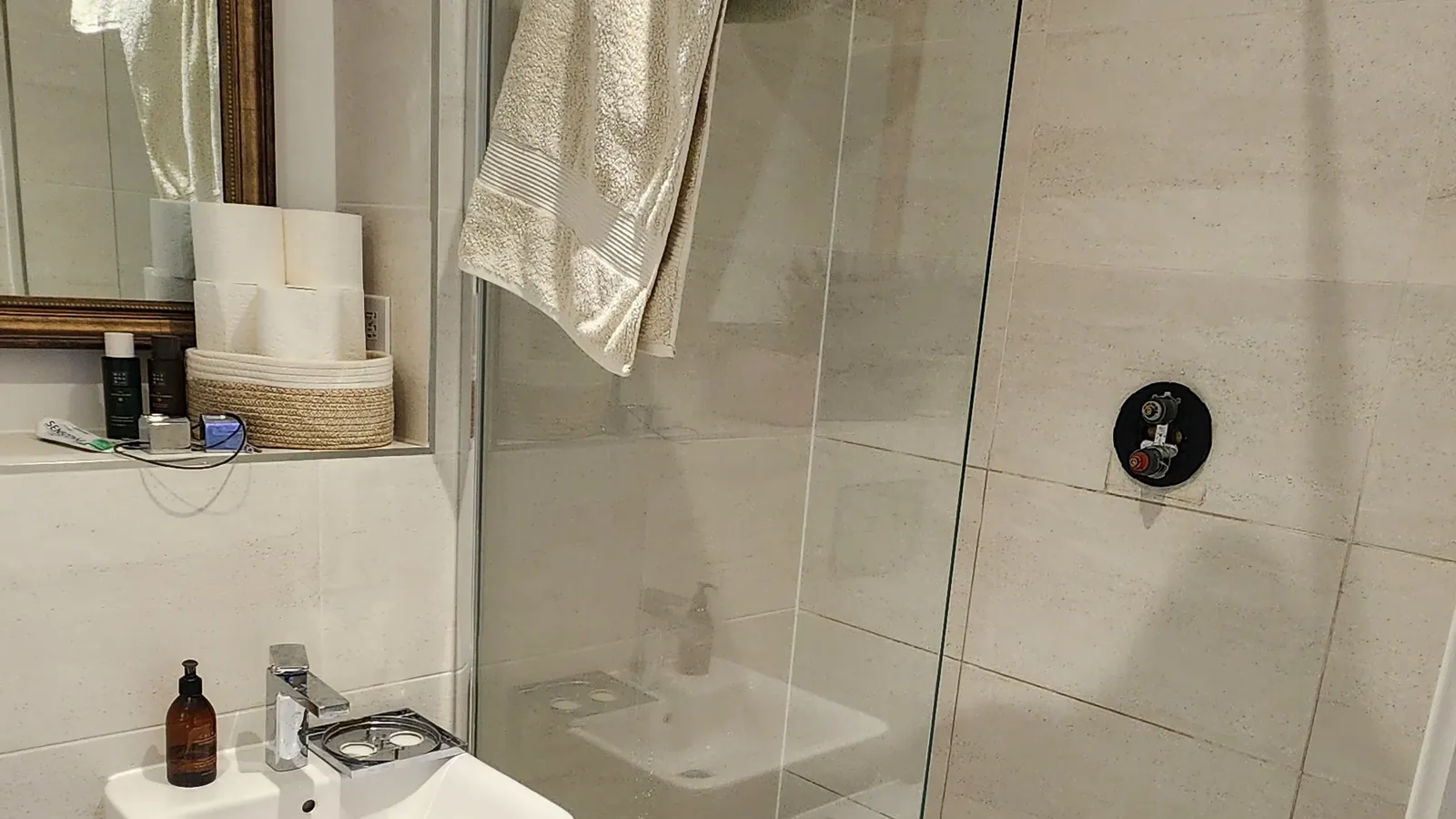
Bathroom Leak
Water reaching the flat below was traced to an ensuite shower room after the bathroom initially suspected by the client was ruled out.
View investigation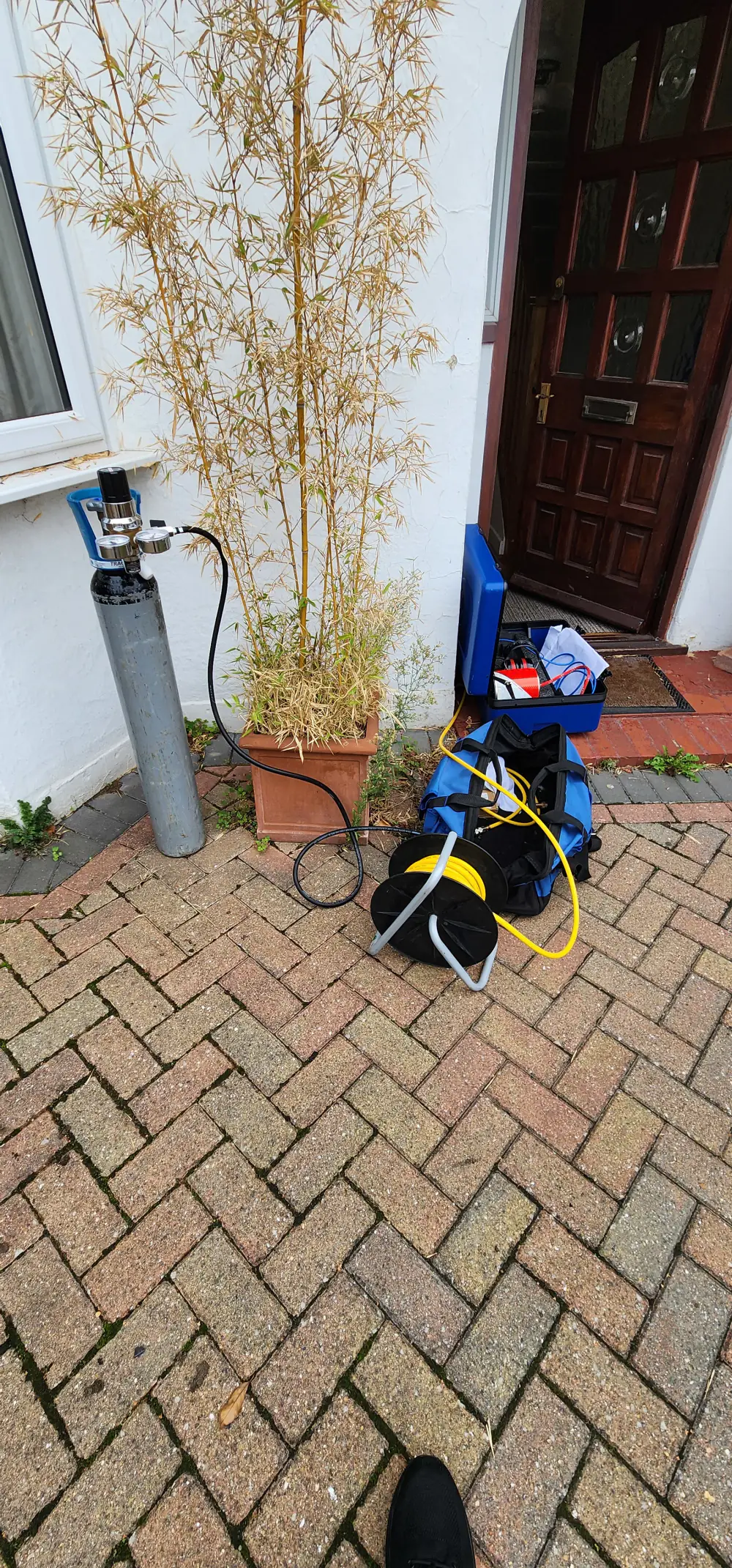
Mains Water Leak
A large bill inconsistent with reported low usage led to testing that confirmed a leak near the water meter for repair planning.
View investigation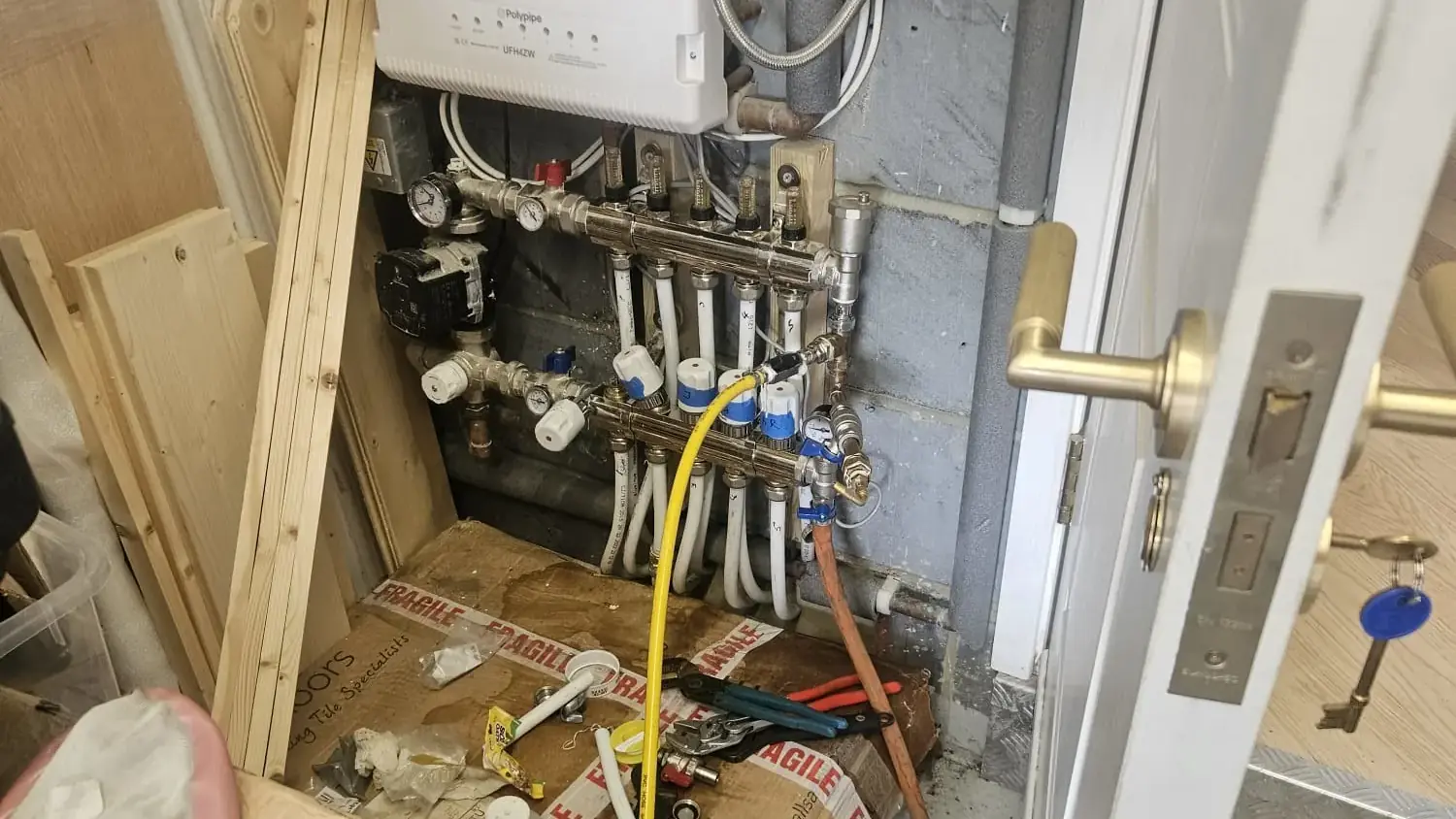
Underfloor Heating Leak
A plumber identified pressure loss on an underfloor heating circuit in Thames Ditton; combined testing narrowed the issue to an area beneath the wood flooring.
View investigationRelated services
External supply pipe and underground water leak detection for running meters and high bills.
Specialist investigation for UFH pipework, pressure loss and damp floor symptoms.
Heating system leak detection for boiler pressure loss and concealed pipework faults.
Leak tracing and access evidence for concealed leaks and insurance claim requirements.
Damp surveys and moisture mapping for water ingress and hidden leak symptoms.
Investigation for hidden waste pipe, soil pipe and foul water leak symptoms.
FAQs
Yes. Tracer gas leak detection uses a specialist test gas mixture selected for leak investigation work. The system must still be assessed and tested safely by trained engineers.
Tracer gas can help locate leaks in suitable isolated pipework, including mains water supplies, heating circuits, underfloor pipework and concealed services.
Yes, where conditions are suitable. Gas escaping from the leak point may migrate through or around floor construction, helping narrow the likely leak location before excavation.
No. Tracer gas testing is non-destructive. It is used to reduce unnecessary opening-up, although access may still be needed later for repair.
Yes. Tracer gas findings can support trace and access reports, photographic evidence and insurance leak investigation records where documented leak location evidence is required.
Request a survey
Speak to a specialist about tracer gas water leak detection, underground services, heating system leaks or concealed pipework.