
Water is escaping from a visible fitting
If water is visibly escaping from a tap, appliance feed, toilet inlet or accessible pipe, isolating the supply may reduce further water damage while the correct repair is arranged.
Leak Detection Guide
Turning off the water supply can help limit water damage, make simple checks clearer and support a water meter leak test when it is safe to do so.
This guide explains which valves to look for, how to turn them off carefully, what different results may mean and when not to force or operate equipment you are unsure about.
Guide
Turning off the water supply is often the simplest way to reduce further water movement while you decide what to do next. It can also help you understand whether water is still passing through the meter when internal pipework has been isolated.
The aim is not to diagnose the leak from the valve alone. The aim is to create a safer, clearer observation. If water stops flowing after the internal stop tap is closed, that usually confirms the valve is controlling at least part of the property's internal supply.
Some properties have more complex water arrangements. Flats, shared buildings, commercial units and older properties may have multiple stop taps, communal risers, external meter valves or plant-room controls. If the arrangement is unclear, do not guess.
Preparation
A safe isolation check depends on knowing what the valve controls and being able to operate it without force.
Before You Start
Only turn off the supply when it is safe, accessible and you are confident the valve serves your property. If a valve is stiff, hidden, shared or close to electrical equipment, stop and seek suitable help.
If water is visibly escaping from a tap, appliance feed, toilet inlet or accessible pipe, isolating the supply may reduce further water damage while the correct repair is arranged.
Closing the internal stop tap can help show whether meter movement may be after the stop tap or before it, but only if the valve is safe and easy to operate.
Where appropriate, turning off the internal water supply before a property is left vacant can reduce the risk of unnoticed water escape from internal outlets.
If a supplier has reported high use or meter movement, safe isolation checks can provide useful information before further investigation is arranged.
Step By Step
Look where the cold water supply first enters the property. Common locations include below the kitchen sink, a utility cupboard, downstairs WC, garage, cellar, service riser or near the front wall.
Make sure you can reach the valve without standing in water, leaning into electrical equipment, moving heavy objects unsafely or opening panels you are not confident replacing.
Most traditional stop taps close by turning clockwise. Turn slowly and do not use excessive force. If the valve is seized, spinning freely, leaking or difficult to move, stop rather than risking damage.
Open a nearby cold tap after closing the valve. The flow should reduce and then stop if the valve controls that part of the supply. There may be a short delay while remaining water drains from the pipework.
If you are investigating unexplained water use, check whether the meter continues moving after the internal stop tap has been closed. Record the result with a photo or written note.
When the check is complete, reopen the valve slowly by turning it anti-clockwise. Avoid opening it abruptly, then check nearby fittings for leaks or unusual noise.
Compare
Different valves can control different parts of the water system. Identifying the valve correctly prevents misleading results.
Interpretation
A stop tap check helps you interpret water movement, but it should not be treated as a full leak diagnosis. The meaning depends on the property layout, meter arrangement and which valve was operated.
This suggests the stop tap controls at least part of the internal cold water supply. It does not prove there is no leak elsewhere, especially if the property has more than one supply route.
The valve may not be fully closed, may not control that outlet, may be faulty or the property may have another supply route. Do not force the valve to prove the point.
If the meter stops after the internal stop tap is closed, the unexplained use may be after that valve. Internal outlets, appliances and concealed internal pipework may need checking.
If the confirmed property meter continues moving, the issue may be before the internal stop tap, on the supply pipe, within a shared arrangement or caused by a meter identification issue.
Decision Guide
Use the isolation result to choose the next sensible route. Avoid treating one observation as final proof.
The valve appears to control at least part of the internal supply.
Next step
Use the result alongside meter behaviour or visible symptoms.
The unexplained movement may be after the internal stop tap.
The issue may be before the internal stop tap, on the supply route or within a shared arrangement.
Avoid Mistakes
A seized valve can leak, break or fail if forced. If it does not move with gentle pressure, stop and arrange suitable help rather than using tools to overpower it.
Some cupboards and meter chambers contain several valves. In shared buildings, the wrong valve may affect another flat, unit or communal system.
Extensions, commercial premises, flats and older buildings can have more than one supply route. A single valve check may only isolate part of the property.
Toilets, appliances, outside taps, softeners and heating-system filling loops can make it look as though water is still moving because of a leak.
Meter chambers can be heavy, wet, deep or close to public areas. Do not enter confined spaces or lift heavy covers if access is unsafe.
When To Get Help
If the stop tap is difficult to operate, leaking around the spindle or you cannot confirm what it controls, avoid further force and arrange appropriate help.
Continued meter movement after safe internal isolation may indicate a supply-pipe, shared-supply or meter-arrangement issue that needs structured investigation.
If there is no visible leak but water use remains unexplained, specialist leak detection may be needed to investigate hidden pipework without unnecessary access work.
Flats, managed buildings, business premises and plant-room systems can be complex. Do not operate communal valves unless you are authorised and understand the system.
If floors, walls, ceilings or electrics are affected, isolation may limit further water movement, but the source still needs to be identified safely.
Next Step
The next step depends on whether the isolation worked and whether the water movement or visible symptom has a clear explanation.
If a visible fitting, appliance hose or toilet explains the issue, arrange the appropriate repair before assuming there is a hidden pipe leak.
If the meter still moves after safe checks, record what happened and review whether mains water leak detection is appropriate.
If the valve is stiff, inaccessible or uncertain, note its location and condition. Do not rely on it for isolation until it has been checked.
Compare your isolation result with meter readings, visible symptoms and property layout. A single valve check rarely explains the whole situation on its own.
Useful Next Steps
Investigation for running meters, high water usage and suspected leaks on underground or external supply pipework.
Non-destructive investigation for hidden leaks inside properties, below floors and behind finishes.
Evidence-led leak tracing and reporting where access decisions or insurance discussions may be required.
Related Investigations
Published investigations involving running meters, high water use or suspected hidden water supply leaks.
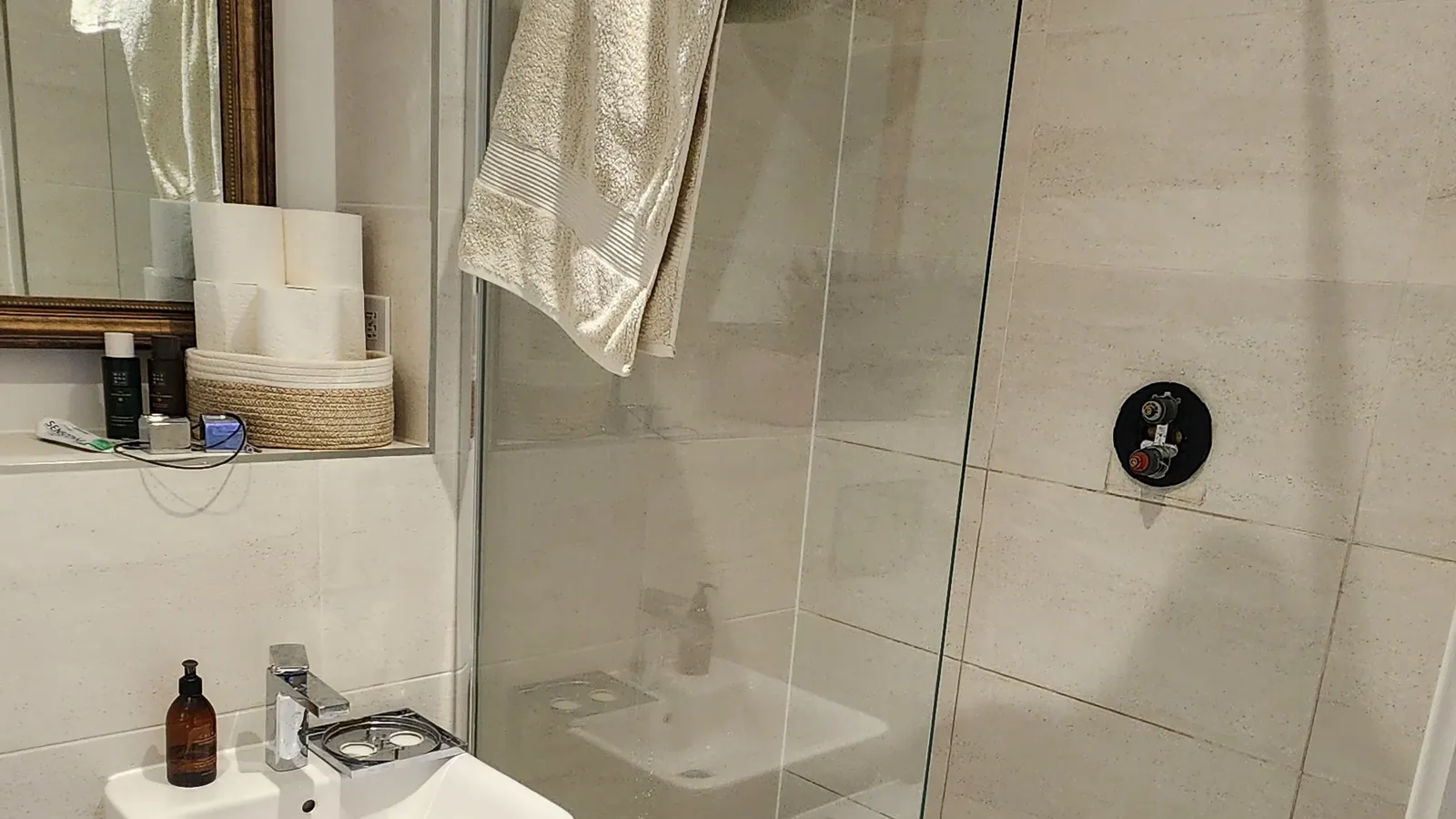
Bathroom Leak
Water reaching the flat below was traced to an ensuite shower room after the bathroom initially suspected by the client was ruled out.
View investigation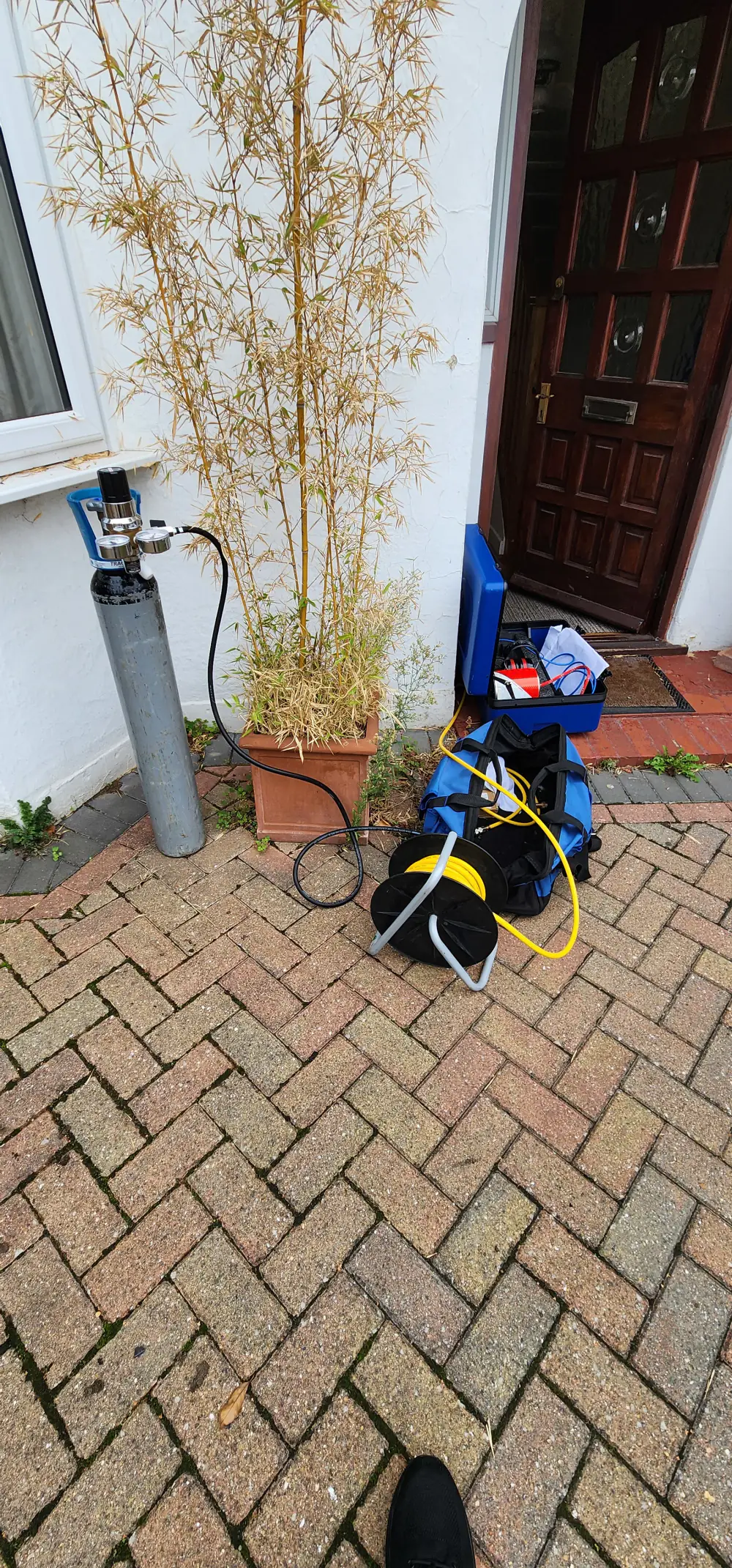
Mains Water Leak
A large bill inconsistent with reported low usage led to testing that confirmed a leak near the water meter for repair planning.
View investigation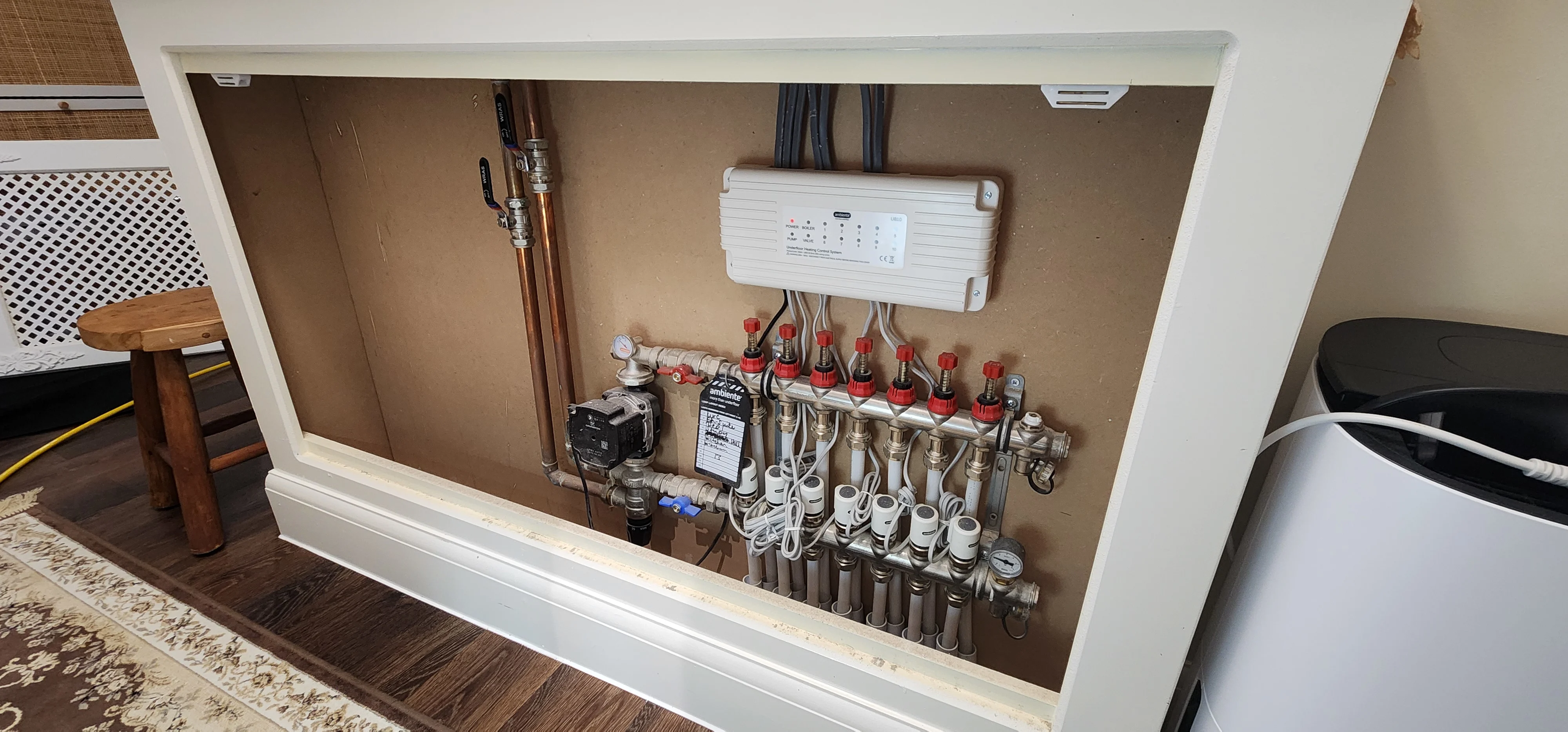
Plumbing Leak Investigation
Heating, hot-water and cold-water circuits were tested after water ingress was reported below; no plumbing leak evidence was found during the visit.
View investigationFAQs
Most traditional stop taps close by turning clockwise. Turn gently and stop if the valve is stiff, leaking, damaged or unclear.
Open a nearby cold tap after closing the valve. The flow should reduce and then stop, although water already in the pipework may run briefly.
Only operate external meter or boundary valves if they are clearly yours, accessible and safe. In shared or public areas, contact the water supplier or managing agent if you are unsure.
No. Isolation checks can narrow down whether water movement may be before or after a valve, but they cannot locate the exact leak or pipe route.
If the meter definitely serves your property and continues moving, the issue may be before the internal stop tap, on the supply pipe or within a shared arrangement. Further investigation may be needed.
Consider specialist leak detection if meter movement remains unexplained, the source is concealed, the supply pipe is underground or water damage is present without a visible cause.
Speak To A Specialist
Tell us what happened when the supply was isolated, whether the meter continued to move and whether any visible water damage is present. We can advise whether specialist leak detection is the right next step.
Phone: 0333 577 0194 WhatsApp: Message us Email: Use the contact form